Category:
Conflicts & SecurityAble Archer 83: Lessons in Deterrence
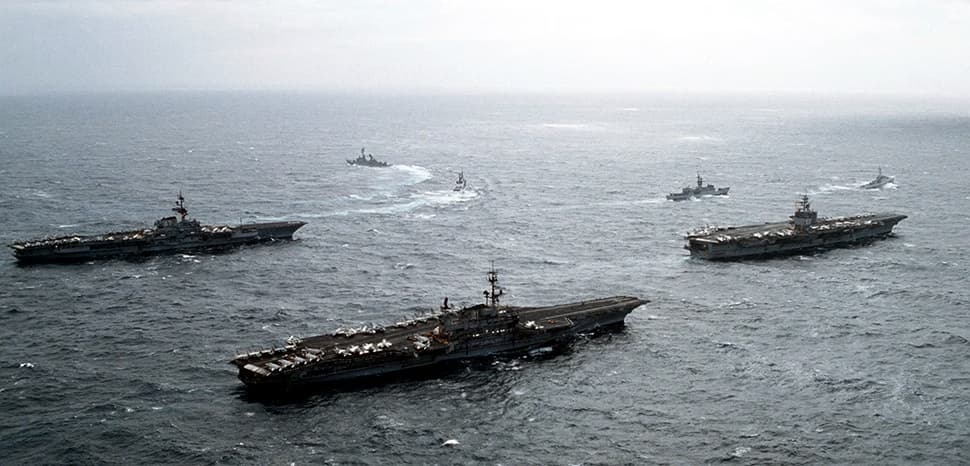
In the intricate web of Cold War tensions, the Able Archer 83 exercise stands as a poignant reminder of how close the world came to nuclear catastrophe. This NATO command post exercise, conducted in November 1983, was designed as a simulation of escalation from conventional warfare to nuclear engagement. However, the Soviet Union perceived it as a potential precursor to a nuclear first strike, nearly triggering a catastrophic response.
The Cold War's Tenuous Balance ⚖️
The geopolitical climate of the early 1980s was fraught with tension. Under President Ronald Reagan's administration, U.S.-Soviet relations had soured significantly. The shooting down of Korean Air Lines Flight 007 by the Soviet Union further escalated distrust and fear, creating an environment ripe for misinterpretation.
During the Able Archer 83 exercise, NATO introduced unprecedented realism with encrypted communications and leadership participation. However, this realism was precisely what alarmed the Soviets, who misread the exercise as actual preparations for war.
The Dual-Contingency Trap 🔍
The concept of deterrence relies heavily on perception. The exercise illustrated that even the most robust deterrence strategies could falter if misperceptions arise. This lesson is especially relevant today as the geopolitical landscape shifts towards a potential dual contingency involving China and North Korea.
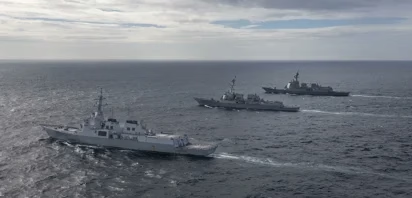
In East Asia, the United States, Japan, and South Korea face a complex strategic environment. A scenario where China initiates military operations against Taiwan could easily coincide with North Korea's opportunistic provocations. This dual threat could unfold rapidly, with actions in one theater affecting perceptions in another.
Escalation in the Indo-Pacific 🌏
In a hypothetical conflict involving Taiwan, China's military might launch precision missile strikes and naval blockades. The U.S. would respond with strategic deployments, such as sending bombers to Guam and deploying carrier strike groups. Japan would enhance its missile defenses, while South Korea would elevate its military readiness.
North Korea, observing these developments, might misinterpret defensive maneuvers as offensive preparations. Pyongyang's response could include ballistic missile tests or cyber operations, actions intended to signal strength but likely to exacerbate tensions.
Navigating Ambiguity and Perception 🧭
The key to effective deterrence lies in clear communication and understanding. Misinterpretations during Able Archer 83 nearly led to disaster. Today, with advanced surveillance and communication technologies, the opportunity to clarify intentions is greater, but so is the complexity of managing multiple crises simultaneously.
To avoid escalation, the trilateral alliance of the U.S., Japan, and South Korea must carefully manage perceptions and maintain open channels of communication. Diplomatic efforts should focus on transparency and reducing the fog of war that can cloud judgment.
Conclusion: Learning from History 📚
The lessons from Able Archer 83 are timeless. The fragility of deterrence underlines the need for robust communication and strategic clarity. As the world faces new geopolitical challenges, understanding the dynamics of perception and response remains crucial. The stakes are high, but so too are the opportunities for peace through effective diplomacy and strategic foresight.
In the evolving global landscape, the ability to navigate dual contingencies without missteps will be a testament to the lessons learned from the past. As nations strive for stability, the echoes of Able Archer 83 remind us of the thin line between peace and conflict.