Category:
Conflicts & SecurityDe-escalation in Iran: Limits of US Power
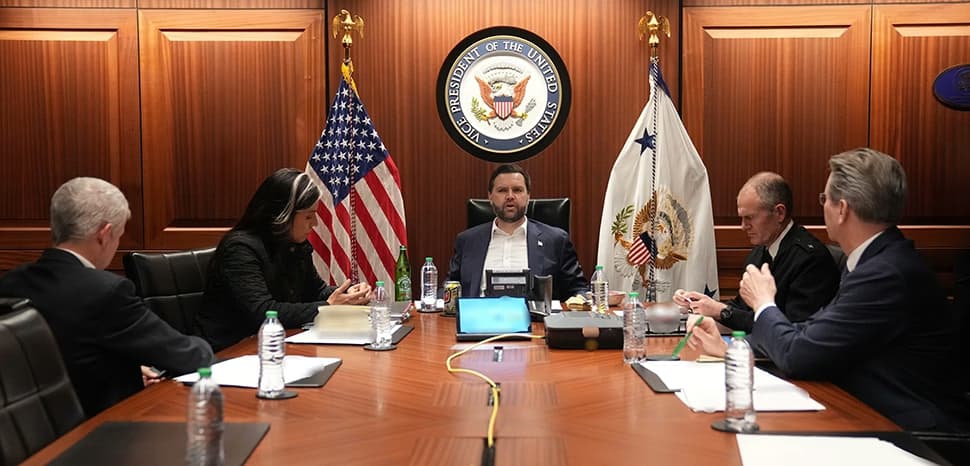
The geopolitical landscape between the United States and Iran is a complex tapestry of diplomacy, military might, and strategic maneuvering. The recent cancellation of planned diplomatic talks in Geneva has highlighted the fragility of negotiations and the difficulty in converting military pressure into lasting political solutions.
The Paradox of American Power 🌍
The United States, with its unmatched military capabilities, remains a dominant force in the Middle East. However, this power does not easily translate into political stability. The ongoing conflict with Iran underscores a central paradox: despite its military superiority, the US struggles to establish a stable regional order. This situation illustrates the limits of American influence, as regional actors increasingly shape the security environment.

Behind-the-Scenes Diplomacy 🕊️
Diplomacy continues quietly behind closed doors, often involving intermediaries like Pakistan, Qatar, Egypt, Saudi Arabia, and Turkey. These nations play crucial roles in mediating between Washington and Tehran. Former President Trump, known for his unpredictable rhetoric, alternated between suggesting imminent agreements and condemning Iran's nuclear ambitions. This inconsistency reflects the uncertainty surrounding the crisis, as both sides leverage pressure and negotiation in their statecraft.
Strategic Strikes and Retaliations 🚀
The US has conducted several targeted strikes, particularly around the Strait of Hormuz, a critical maritime chokepoint. These actions aimed to deter Iranian aggression while showcasing American military resolve. In response, Iran has launched retaliatory attacks on vessels and American interests across the region, from Bahrain to Jordan. These calculated moves are intended to demonstrate Iran's resilience and deter further US aggression.
The Cost of Conflict 💰
The conflict has incurred significant costs for both sides. The US, for instance, has expended approximately 1,000 Tomahawk missiles, each costing between $2–2.5 million. This financial burden, coupled with the strain on missile inventory, reveals a strategic vulnerability. Replenishing these stocks could take years, highlighting the challenges of maintaining military dominance in prolonged conflicts.
Operation Epic Fury: Objectives and Outcomes 🎯
Operation Epic Fury aimed to prevent Iran's nuclear armament and establish a regional order independent of US military guarantees. However, the operation exposed the limits of American power. While the US cannot indefinitely serve as the region's security provider, it remains willing to engage, provided regional states contribute economically.
A Post-America Middle East?
The conflict with Iran has accelerated the shift towards a post-America Middle East. Although US military power remains formidable, its ability to convert this into a sustainable regional order is diminishing. This paradox necessitates a reevaluation of America's role in the region. As regional actors gain prominence, the US must navigate this increasingly complex environment to maintain its strategic interests.
Conclusion: The Path Forward 🔍
The ongoing situation between the US and Iran is emblematic of broader geopolitical trends. As both nations engage in coercive diplomacy and armed bargaining, the emphasis is on maximizing negotiating leverage while avoiding wider regional conflict. The future of US-Iran relations remains uncertain, but the current dynamics suggest a continued interplay of military and diplomatic strategies. Observers will be watching closely to see if a sustainable resolution can emerge from this intricate geopolitical chess game.