Category:
Economy & TradeInflate Away Debt? Logic & Risks of Weak Dollar

The global economic landscape is perpetually evolving, and one concept that has garnered significant attention is the strategic logic and potential risks of a weak dollar regime. This approach raises critical questions about how sovereign debt is managed and the broader implications for the US economy and global markets.
The Strategic Logic Behind a Weak Dollar
Historically, nations with substantial public debt have often sought to mitigate their financial burdens through a combination of nominal growth, inflation, and currency depreciation. This strategy can indirectly reduce the real value of debt, making it more manageable. For the United States, the decision to allow the dollar to weaken could be seen as part of a larger, albeit unofficial, debt management strategy.
The Economic Context
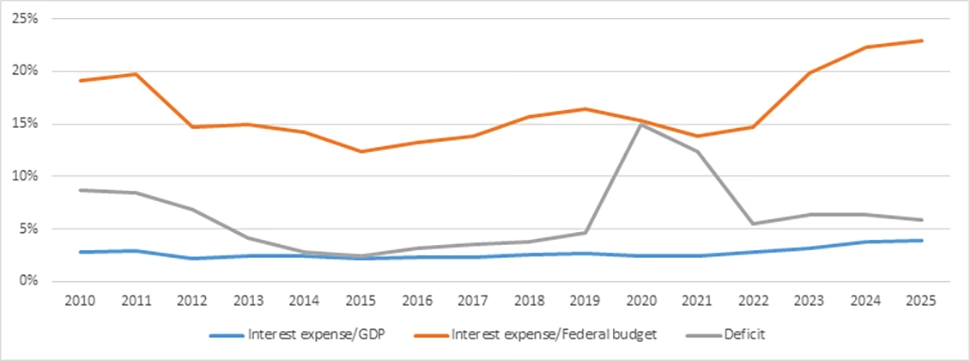
Since the 2008 financial crisis, low-interest rates have played a crucial role in keeping the fiscal consequences of persistent deficits at bay. However, as rates began to rise post-2021, the costs associated with refinancing debt became more pronounced. The US Treasury, which relies heavily on refinancing maturing obligations, has faced increasing fiscal pressure as interest expenses have surged faster than federal revenues.
Risks of a Weak Dollar Regime
While a weaker dollar might offer temporary relief for debt management, it carries significant risks. A key vulnerability is the structure of the US debt itself. With a large portion of Treasury debt being nominal rather than inflation-linked, rising interest rates can exacerbate fiscal rigidity.
Impact on Global Markets
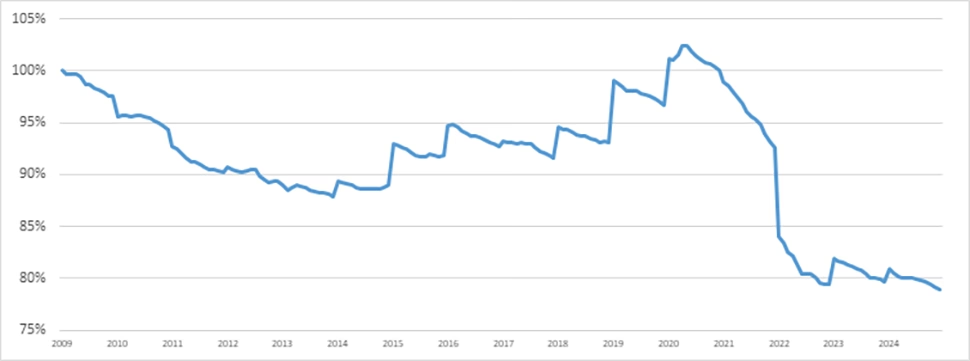
The US dollar serves as the world's primary reserve currency, and any shift in its value can ripple through global markets. A weaker dollar can lead to increased volatility in foreign exchange markets and impact global trade dynamics. Moreover, US Treasury securities function as core collateral in global funding markets. Changes in dollar value can influence the availability and composition of these key financial instruments.
Policy Options and Challenges
The principal policy options for managing high sovereign debt levels include fiscal consolidation, growth-oriented investment, and financial repression. Each comes with its own set of challenges:
- Fiscal Consolidation: This involves spending cuts or tax increases aimed at reducing deficits. However, such measures can weaken aggregate demand and are politically challenging.
- Growth-Oriented Investment: Investments in infrastructure and technology can boost productivity but require time to yield results.
- Financial Repression: This subtle strategy involves measures such as capping interest rates below inflation, effectively reducing the real value of debt.
Political and Economic Constraints
In the US, political polarization and structural budget constraints add layers of complexity to debt management. Programs like Social Security and Medicare consume significant portions of the federal budget, leaving limited room for maneuvering. Moreover, the US tax system's progressivity is diminished when unrealized capital gains are considered, highlighting challenges in taxing concentrated wealth.
Conclusion: Navigating Uncertain Waters
The strategy of inflating away debt through a weak dollar regime presents both opportunities and significant risks. While it may offer temporary fiscal relief, the long-term implications for economic stability and global market dynamics cannot be underestimated. Policymakers must carefully balance these factors, considering both domestic economic health and the interconnected nature of global finance.
In a world where economic decisions are closely scrutinized, understanding the strategic logic and risks of a weak dollar regime is crucial for both policymakers and investors. As the US navigates these uncertain waters, the global financial community watches closely, ready to respond to shifts in the economic tide.