Category:
Conflicts & SecurityIran's Misalignment with Gulf Security

The geopolitical landscape of the Gulf region has been dramatically reshaped by recent developments, as Iran's actions have increasingly threatened the fragile security balance. Despite temporary ceasefires, the underlying tensions have not only persisted but have escalated, redefining Iran's role in the regional security architecture.
Historical Context and Current Dynamics
For decades, Gulf states maintained a complex relationship with Iran, balancing deterrence with diplomacy. However, this equilibrium has been shattered by Iran's recent aggressive actions. The strategic targeting of Gulf Cooperation Council (GCC) countries through missile and drone strikes has signaled a shift in Iran's approach, evolving from a regional competitor to a direct threat.
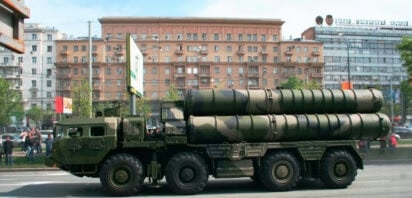
Iran's strategy of horizontal escalation has involved targeting critical infrastructures like energy facilities, ports, and data centers across the Gulf. Notably, the United Arab Emirates (UAE) has borne the brunt of these attacks, highlighting Iran's willingness to expand the battlefield beyond its immediate adversaries.
The Implications of Iranian Actions
Iran's aggressive posturing is not merely a tactical maneuver but part of a broader doctrine aimed at destabilizing the Gulf. This approach has significant implications:
- Economic Disruption: Iranian strikes have targeted key economic zones, aiming to disrupt global energy markets and maritime trade, notably through the strategic Strait of Hormuz.
- Security Threats: The continuous missile and drone threats have strained Gulf states' defense systems, marking a persistent risk to regional stability.
- Political Signals: Iran's willingness to target non-combatant neighboring states breaks the foundational principles of regional coexistence.
Strategic Analysis: A Systemic Threat
Iran's approach to regional security is rooted in asymmetric warfare, leveraging proxy networks and economic coercion. This model remains intact, posing a systemic threat to Gulf security. Despite assurances, the Gulf states and the international community recognize that Iran's capability and intent signify a persistent threat.
The situation raises critical questions about the future of regional security. Can lasting peace coexist with Iran's current strategic model? Increasingly, the answer appears negative, as Iran's actions contribute to a managed crisis environment rather than genuine stability.
Looking Forward: Addressing the Security Challenge
Moving forward, Gulf states and the international community face significant challenges in addressing the Iranian threat. Key considerations include:
- Strengthening Regional Alliances: Enhanced cooperation among Gulf states and with international allies can bolster regional defense capabilities.
- Diplomatic Engagement: While challenging, diplomatic efforts should continue to address Iran's destabilizing activities and seek avenues for de-escalation.
- Economic Strategies: Diversifying energy exports and securing maritime trade routes can mitigate the impacts of Iranian aggression.
Conclusion
Iran's actions have irrevocably altered the security dynamics of the Gulf region. As tensions mount, Gulf states must navigate a complex security landscape, balancing deterrence with diplomacy to ensure long-term stability. The road ahead requires strategic foresight, international cooperation, and a commitment to addressing the systemic threats posed by Iran's current geopolitical stance.