Category:
Conflicts & SecurityItaly's Bold Move: Bayraktar TB3 Drones on Carriers
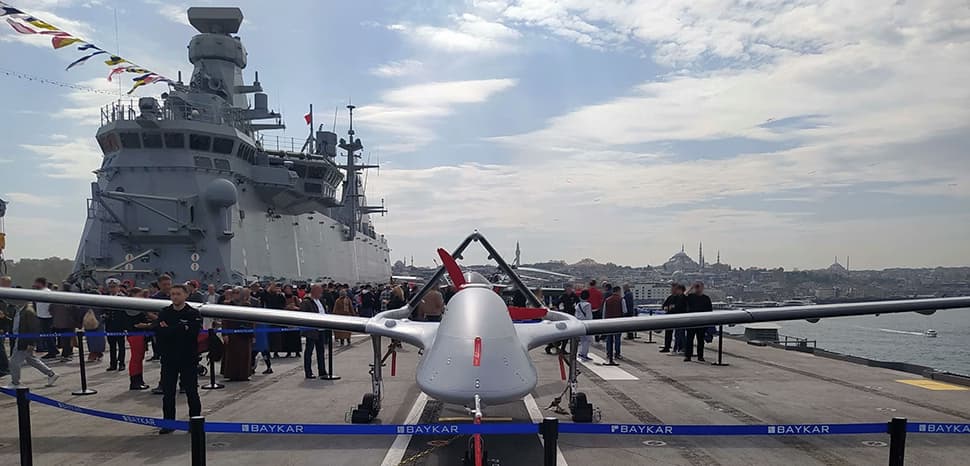
Italy's recent decision to integrate Turkey's Bayraktar TB3 drones into its naval operations marks a pivotal shift in European military strategy 🌍. This move positions Italy as the first European nation to deploy carrier-launched armed drones, a development that could redefine naval aviation on the continent.
The Bayraktar TB3: A Game-Changer for Naval Aviation 🚁
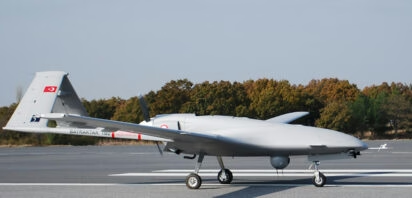
The Bayraktar TB3 is an advanced naval drone tailored for operations from short-deck carriers. Its design includes folding wings for efficient deck handling, reinforced landing gear for robust carrier operations, and systems optimized for maritime environments. Capable of carrying a 280 kg payload, the TB3 can deploy over six precision-guided munitions, loitering munitions, and even supersonic missiles.
Italy's Strategic Decision 📈
Italy's Chief of Navy, Vice Admiral Giuseppe Berutti Bergotto, announced this strategic procurement during a Senate hearing. The decision follows the TB3's impressive performance during NATO's Steadfast Dart 2026 exercise in the Baltic Sea, where the drones executed over 200 sorties under challenging conditions. This exercise highlighted Europe's ability to project force independently of the US, with the TB3 completing the first full ship-to-target combat cycle in NATO history.
The Leonardo-Baykar Partnership 🤝
The procurement of the TB3 drones is facilitated through LBA Systems, a joint venture between Leonardo and Baykar, established in 2025. This partnership underscores a shift in the European defense landscape, especially as internal EU drone programs struggle to deliver results. The Eurodrone project, involving Germany, France, Italy, and Spain, faces delays and potential cost overruns, while the UK's MQ-9B Mojave trials have not progressed to procurement.
Implications for European Defense Strategy 📊
Italy's choice to collaborate with Turkey, a NATO ally but not an EU member, raises questions about Turkey's role in European defense. Despite its significant military capabilities and burgeoning defense industry, Turkey remains outside EU defense frameworks. This decision forces Europe to reconsider its defense strategy and the potential integration of Turkey into a broader defense vision.
Looking Ahead: The Future of European Naval Power 🛡️
As Italy integrates the TB3 drones aboard its aircraft carrier Cavour, it sets a precedent for other European nations. The move not only fills a critical gap in Europe's naval capabilities but also signals a shift towards more agile and versatile military strategies. The success of the TB3 could inspire other European navies to explore similar collaborations, potentially reshaping the continent's defense dynamics.
In conclusion, Italy's acquisition of the Bayraktar TB3 drones is a strategic leap forward, enhancing its naval capabilities and challenging the status quo of European defense collaboration. As geopolitical landscapes evolve, such decisions will likely play a crucial role in shaping the future of international security and military alliances.