Category:
Conflicts & SecurityUkraine War's Impact on Russia's Strike Power
The Unanticipated Evolution of Russia's Arsenal 🚀
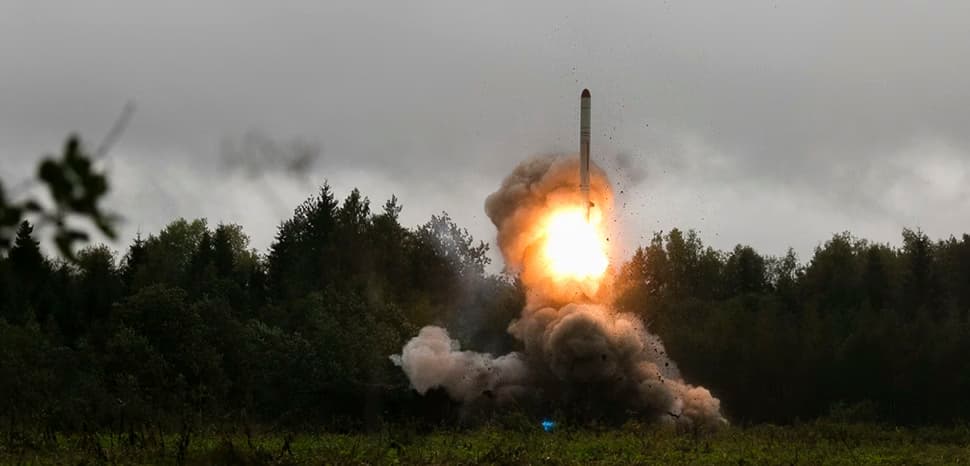
In the midst of the ongoing conflict in Ukraine, a surprising transformation has taken place within Russia's military capabilities. Contrary to initial predictions that Russia's long-range missile arsenal would be depleted, the opposite has occurred. Instead, Russia has not only replenished its stock but also expanded it, showcasing an arsenal that is larger and more varied than before the conflict began. This unexpected development has significant implications for global security and geopolitical dynamics.
Strategic Adaptations in Long-Range Capabilities 📈
Russia's defense industry has undergone a profound transformation, focusing on three key priorities: extending range, increasing warhead lethality, and saturating enemy defenses. This strategic adaptation has allowed Russia to maintain a formidable offensive capability against Ukrainian targets, primarily through the integration of drones and missiles.
One of the most significant adaptations is the development of the Shahed-class drone. Initially sourced from Iran, these drones have become a cornerstone of Russia's strategy. By setting up domestic production in Tatarstan, Russia has managed to not only meet but exceed its production targets, significantly reducing costs and increasing the sophistication of these drones.
A Three-Tiered Approach to Modern Warfare 🔍
Russia's long-range strike strategy can be categorized into three operational tiers, each addressing specific challenges and threats. The boundaries between these tiers have become increasingly blurred, as technological advancements have enhanced the payloads and ranges of drones and missiles.
- Tier One: Utilizes cheap drones in swarm tactics to overwhelm enemy defenses.
- Tier Two: Employs cruise missiles for precision strikes on strategic targets.
- Tier Three: Leverages ballistic missiles to penetrate heavily fortified defenses.
This layered approach complicates defensive measures, forcing adversaries to make quick decisions about which threats to counter and which to allow through.
Industrial Growth and Domestic Production 🛠️
The establishment of a domestic production line for drones and missiles has been a game-changer for Russia. The Alabuga Special Economic Zone in Tatarstan is a prime example of this shift, where production of the Shahed-136 drone has soared. By transferring technology and expertise from Iran, Russia has achieved a high level of self-sufficiency, with current outputs reaching over 5,500 units per month.
This adaptation has not only made these weapons more affordable but has also allowed Russia to enhance their capabilities beyond the original specifications provided by Tehran.
Implications for Global Security 🌍
The expansion of Russia's long-range strike capabilities poses significant challenges for international security and defense strategies. The ability to produce sophisticated weaponry domestically reduces reliance on foreign partners and can potentially shift the balance of power in ongoing and future conflicts.
For Ukraine, this means facing a more persistent and varied threat, requiring constant adaptation and innovation in defense strategies. On a broader scale, NATO and other global powers must reassess their strategic approaches to counteract these developments effectively.
Looking Ahead: Future Developments and Considerations 🔮
As Russia continues to enhance its long-range strike capabilities, it is crucial for the international community to monitor these developments closely. Future conflicts may see even more advanced technologies being deployed, with implications for global stability and peacekeeping efforts.
Key takeaways include the importance of innovation in defense technologies and the need for international cooperation to address the challenges posed by evolving military capabilities.
In conclusion, the Ukraine war has reshaped not only the battlefield strategies but also the broader geopolitical landscape, highlighting the dynamic nature of modern warfare and the critical need for adaptive strategies in defense and international relations.