Category:
Conflicts & SecurityUS Shipbuilding: Unprepared for Modern Conflict
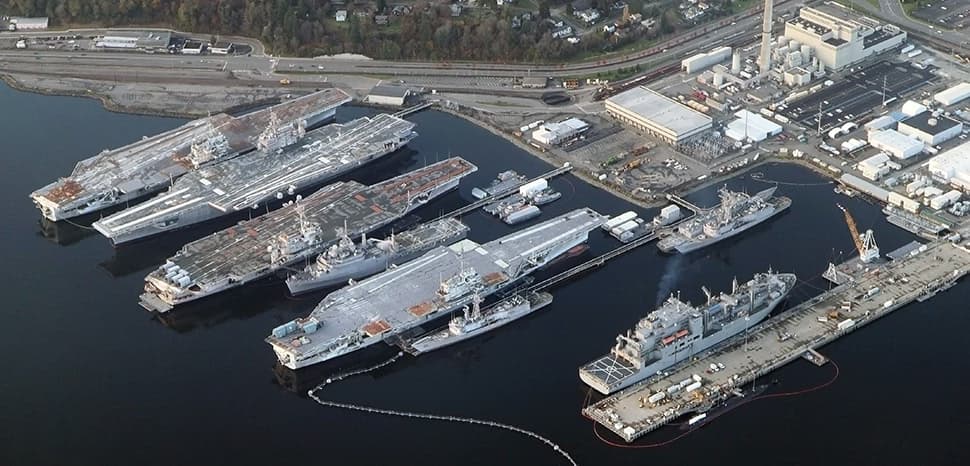
The global balance of naval power is shifting, and the United States is caught in a precarious position. Despite its historical dominance, the U.S. shipbuilding industry faces significant challenges that hinder its ability to support military ambitions effectively. With tensions rising globally, it's crucial to examine why the U.S. shipbuilding sector is not adequately prepared for a large-scale conflict.
Historical Context: A Decline in Dominance ⚓
During World War II, the United States was a powerhouse in shipbuilding, producing over 1,000 warships in just four years. This capacity for industrial mobilization was unparalleled. However, the scenario has changed dramatically over the decades. The U.S. now contributes less than 0.13% of the world's shipbuilding, a stark contrast to its past prowess.
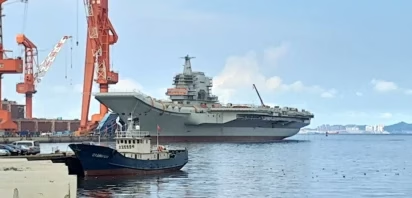
China, on the other hand, has surged ahead, fulfilling 71% of global shipbuilding orders. The People's Liberation Army Navy (PLA Navy) now surpasses the U.S. Navy in size, with plans to expand further by 2030. This shift in naval capabilities underscores a critical gap in U.S. maritime strategy.
Technological Disparities and Tactical Challenges 🚢
The disparity isn't just in numbers. Technologically, the PLA Navy's warships are outfitted with advanced weaponry, like the Type 055 destroyer, which features 112 vertical missile cells and hypersonic missile capabilities. In comparison, the latest U.S. destroyers lag behind in both firepower and technological advancement.
The U.S. Navy's reliance on retrofitting older ships to integrate new technologies is a costly and time-consuming endeavor. This approach hampers the ability to swiftly adapt to modern warfare's demands, such as countering drone swarms effectively. Directed-energy weapons like the HELIOS laser are deployed on only a few vessels due to limitations in existing platforms' electrical capacities.
Economic and Strategic Implications 💸
The financial burden of maintaining current defenses against cheaper, mass-produced threats, such as drones, is unsustainable. During recent conflicts, the U.S. Navy was forced to use expensive interceptors against low-cost Iranian drones, creating a cost asymmetry that drains resources and missile stockpiles.
Moreover, the inability to rapidly produce new vessels constrains strategic flexibility. The U.S. faces a potential scenario where it might struggle to sustain naval operations in a prolonged conflict. This is a significant shift from its historical capacity to quickly replenish and expand its fleet during wartime.
The Path Forward: Revitalizing U.S. Shipbuilding 🛠️
To address these challenges, the U.S. needs to revitalize its shipbuilding industry. This involves investing in modern facilities capable of producing technologically advanced vessels at a competitive pace. Such a pivot would not only enhance military readiness but also bolster economic growth and job creation within the sector.
Additionally, fostering innovation in naval technologies, prioritizing the integration of directed-energy weapons, and expanding electrical capacities on new builds are crucial steps. Collaborations with private industries and increased funding for research and development can drive these advancements.
Conclusion: Navigating the Future of Naval Power 🌊
As geopolitical tensions continue to rise, the capacity to project naval power effectively is more essential than ever. The U.S. must address its shipbuilding shortcomings to ensure it remains a formidable force on the global stage. By investing in modernizing its fleet and overcoming current limitations, the U.S. can secure its maritime future and maintain its strategic advantage.
In conclusion, revitalizing the U.S. shipbuilding industry is not just about numbers or technology; it's about preserving national security and exerting influence in an increasingly complex world. The path forward requires decisive action and strategic investment to navigate the challenges of modern naval warfare.