Category:
Geopolitical AnalysisAmerica's Gamble with Iran: A Risky Strategy
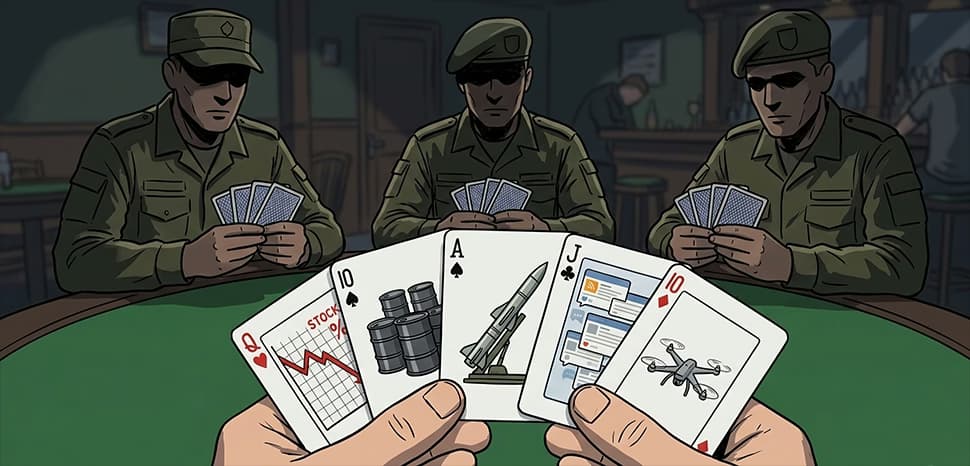
The Next-Hand Syndrome Explained 🎲
In the realm of international politics, decisions often resemble high-stakes games rather than calculated strategies. This is particularly true in the context of the United States' military campaign against Iran, dubbed Operation Epic Fury. The decision encapsulates what can be termed the "next-hand syndrome," a state where past strategic frustrations push a nation into taking drastic actions in hopes of rewriting a troubled narrative.
A Historical Context 🕰️
The United States' stance towards Iran has been shaped by a series of complex interactions, starting with the withdrawal from the nuclear agreement. The intention was to corner Tehran into negotiating a more favorable deal, but the reality was starkly different. Iran's resilience under economic sanctions and military threats exposed the limits of U.S. strategy, revealing a pattern akin to the gambler’s fallacy, where repeated failures lead to escalated actions rather than reassessment.
The Gambler’s Fallacy in Foreign Policy 🎰
The gambler’s fallacy is a psychological phenomenon where one believes that a series of losses increases the likelihood of a subsequent win. In the geopolitical arena, this fallacy manifests when leaders misinterpret past failures as indicators that only more significant actions can yield success. The U.S. engagement with Iran, particularly under President Trump, illustrates this mindset. The administration's approach transformed foreign policy into a stage for dramatic gestures, aimed more at altering narratives than achieving sustainable outcomes.
The Operation Epic Fury: A Strategic Gamble ⚔️
Operation Epic Fury is a testament to the United States' departure from traditional deterrence. Rather than a calculated military necessity, it represents a bold gamble influenced by a desire to change the geopolitical equation through a single, decisive act. This approach is fraught with risks, as history shows that wars often spiral beyond the control of their initiators, leading to prolonged engagements with unforeseen consequences.
Lessons from History: The Perils of Escalation 📜
The United States' military history is replete with examples where limited operations evolved into protracted conflicts. Vietnam, Iraq, and Afghanistan all began with assumptions of manageability but transformed into extensive commitments. The danger of escalation lies in the political and reputational investments that make withdrawal difficult. Each additional step is not about victory but justifying previous actions.
Current Geopolitical Dynamics 🌍
Today, the U.S. faces challenges of relative decline, strategic competition with China, and domestic polarization. These pressures make dramatic military actions tempting as a means to assert strength. However, history teaches that great powers often engage in high-risk wars when they feel the need to reaffirm their status, only to expedite their strategic exhaustion.
Conclusion: Navigating the Future ⚖️
Operation Epic Fury illustrates the complexities of the next-hand syndrome, where the desire for decisive victories can overshadow strategic prudence. The path forward for the United States involves recognizing the limits of military power and the need for diplomatic engagement. As the geopolitical landscape evolves, balanced decision-making will be crucial in avoiding the pitfalls of past gambles and in charting a sustainable course.
In summary, the U.S. gamble with Iran highlights the intricate dance between power, perception, and reality in international relations. The lessons from this episode will likely inform future strategies in navigating the complex web of global politics.
You May Also Like

Geopolitical Analysis
Saudi Arabia's Bold Minerals Strategy
July 1, 2026
Geopolitical Analysis
Strategic Challenges in Securing the Strait of Hormuz
June 30, 2026
Geopolitical Analysis
Sovereignty, Airpower & Alliance Integration Limits
June 30, 2026
Geopolitical Analysis
Myanmar: A Renewed Frontline in India-China Tensions
June 29, 2026