Category:
Geopolitical AnalysisCould Canada Join the EU? Exploring the Prospects
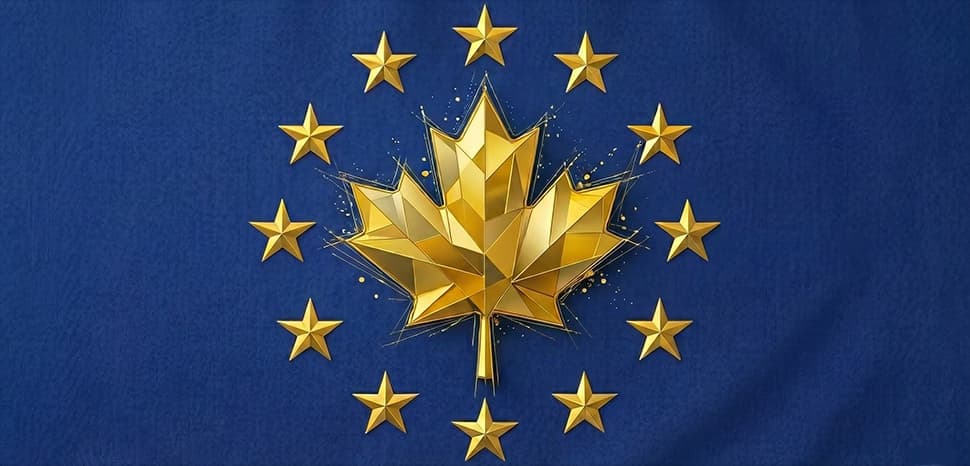
Europe and Canada may seem worlds apart geographically, but recent discussions have sparked curiosity about the possibility of Canada joining the European Union. 🌍 The idea, while unconventional, raises intriguing questions about geography, law, and shared values.
Geography vs. Legal Boundaries
The EU's reach extends beyond traditional European borders, with territories in the Pacific and other regions. This raises the question of what truly defines 'Europe.' Is it merely geography, or does it also encompass shared values and legal principles?
The Legal Landscape
The EU's treaties set accession conditions, yet they leave the definition of 'Europe' open-ended. Article 49 of the Treaty on European Union (TEU) states that any European state respecting EU values can apply for membership. But what constitutes a 'European state' is not strictly defined, allowing room for broader interpretations.
Canada's Compatibility with the EU
Cultural and Linguistic Ties
Canada's bilingual nature and its cultural ties with Europe, especially through French and English, align it closely with EU member states. These shared languages and cultural values could make Canada a suitable candidate for EU membership.
Economic Integration
Canada and the EU already share a strong economic relationship through agreements like the Comprehensive Economic and Trade Agreement (CETA). This integration forms a solid foundation for deeper political and legal ties.
The Challenges and Opportunities
Geopolitical Implications
Joining the EU would require Canada to navigate complex geopolitical waters. It would need to balance its relationships with both the EU and its North American neighbors.
Legal and Political Hurdles
The EU is not a static entity. It continuously renegotiates its boundaries and values, which means Canada would have to align itself with the EU's evolving legal and political landscape.
The Future of EU Enlargement
A Dynamic Union
The EU is capable of adapting and expanding its reach. Recent elections and debates within the Union suggest a willingness to reconsider its current boundaries and membership criteria.
Speculative but Serious
While the notion of Canadian EU membership remains speculative, it is taken seriously in academic and political circles. It challenges traditional notions of what it means to be 'European' and opens the door for non-continental states to join the Union.
Conclusion: A New Era of Cooperation?
Could Canada truly join the EU? While it remains a theoretical possibility, the discussions highlight the evolving nature of international alliances and the importance of shared values over strict geographical boundaries. 🔍 As the EU continues to redefine itself, the concept of European identity may broaden, paving the way for new forms of cooperation and unity.
📬 Stay tuned for more insights on geopolitical trends and the future of international relations.
You May Also Like

Geopolitical Analysis
Saudi Arabia's Bold Minerals Strategy
July 1, 2026

Geopolitical Analysis
Strategic Challenges in Securing the Strait of Hormuz
June 30, 2026
Geopolitical Analysis
Sovereignty, Airpower & Alliance Integration Limits
June 30, 2026
Geopolitical Analysis
Myanmar: A Renewed Frontline in India-China Tensions
June 29, 2026