Category:
Geopolitical AnalysisCredibility Index: Assessing US Power Resilience

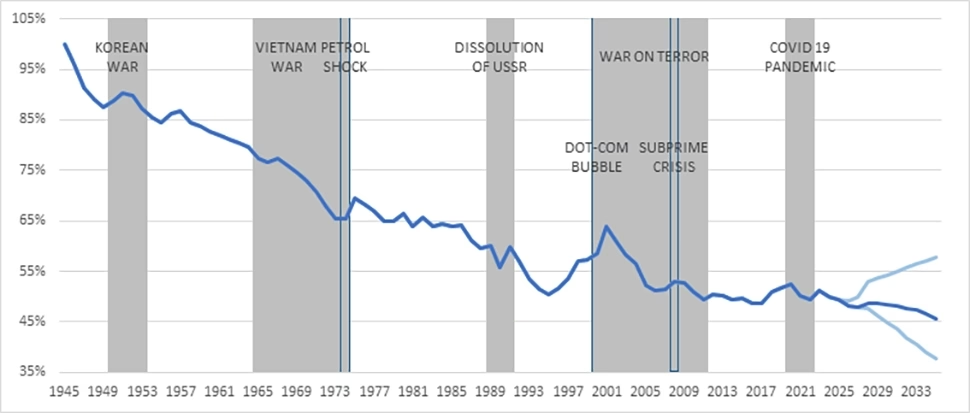
In an ever-evolving global landscape, the resilience of hegemonic powers is constantly tested. The Credibility Index offers a novel, data-driven method to evaluate this resilience, particularly in the context of US power. This approach considers not just economic and military might, but also a nation's ability to withstand shocks and maintain a competitive edge. 🌍
Understanding the Credibility Index
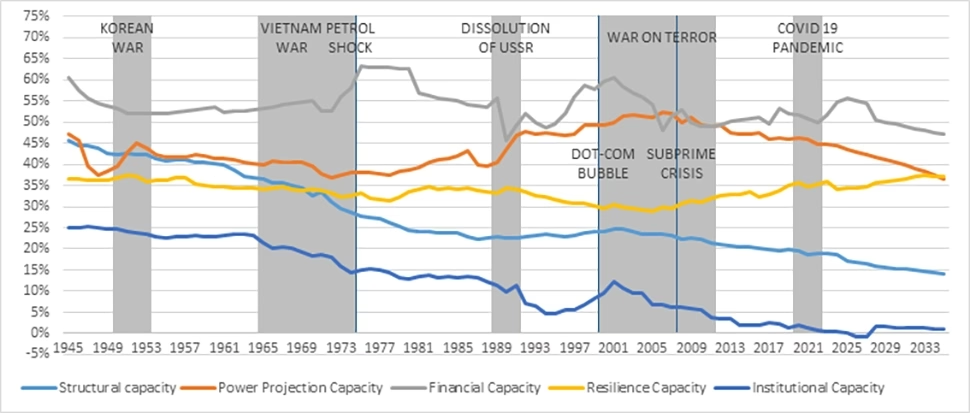
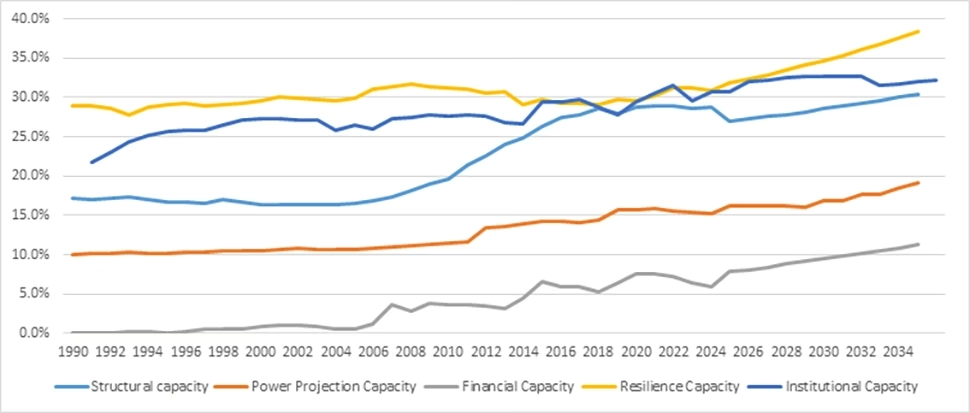
The Credibility Index shifts focus from traditional metrics like GDP and military expenditure to a broader assessment of structural scale, financial capacity, military reach, resilience, and institutional cohesion. This multidimensional analysis presents a comprehensive view of a country's durability in the international arena.
US vs. China: A Comparative Trajectory
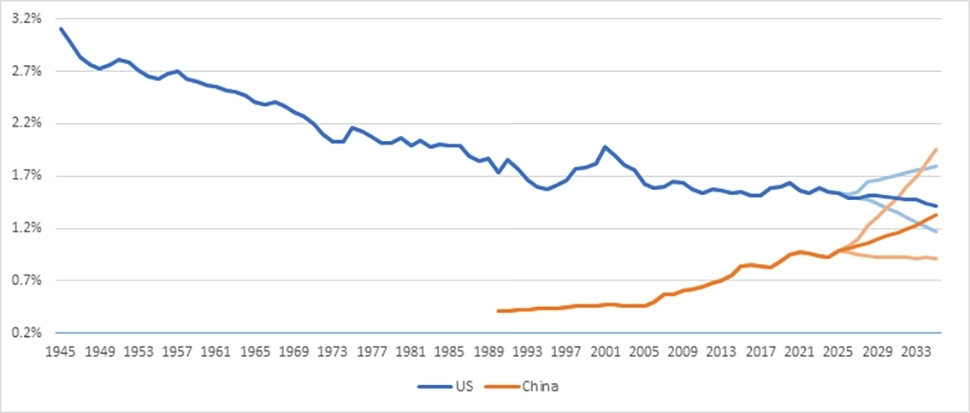
The United States and China are often compared in terms of global influence. While China's growth strategy emphasizes rapid acceleration, the US seems to focus on sustaining its existing power. The question remains: how can the US adapt to a world increasingly characterized by managed bipolarity?
Historical Parallels and Lessons
Historically, empires like Rome and Britain faced challenges that led to gradual declines rather than abrupt collapses. For instance, the Late Roman Empire struggled with fiscal strain and military overstretch, issues that resonate in today's geopolitical climate. The US, like these empires, must navigate internal and external pressures to maintain its standing.

Structural Advantages and Challenges
The United States enjoys several structural advantages: geographic insulation, favorable demographics, and energy self-sufficiency. These factors contribute to its resilience against systemic shocks. However, the real threat lies in the erosion of institutional trust and flexibility, which could lead to a prestige crisis.
The Role of Federalism
Federalism in the US acts as a stabilizer, ensuring that state governments continue to function even when federal governance faces gridlock. This decentralized power structure has historically buffered the US against complete systemic breakdowns.
The Risk of Gradual Erosion
While the threat of sudden collapse is minimal, the US faces risks associated with gradual erosion. Declining global legitimacy and internal distrust could undermine its position. A severe financial correction or political crisis could test the nation's resilience significantly.
A Path Forward: Adaptation and Renewal
Adaptation remains a viable strategy for the US. Historical periods of perceived decline, such as the Gilded Age, were followed by renewal and reform. Today, challenges like fiscal sustainability and strategic coordination require urgent attention to prevent stagnation.
The Global Shift Toward Competitive Pluralism
The international order may transition from US-centric liberalism to more competitive blocs. This shift is already evident in the rise of supranational institutions and empowered non-state actors. The US must navigate these changes carefully to maintain its influence.
Conclusion: The Imperative of Strategic Credibility
Ultimately, the Credibility Index underscores the importance of credibility as a strategic resource. It is not merely about power projection but how power is perceived and exercised. As global dynamics evolve, the US must leverage its structural advantages while addressing internal weaknesses to sustain its hegemonic role.
The journey ahead is challenging, but with strategic adaptation, the United States can continue to wield significant influence in the world stage.
You May Also Like

Geopolitical Analysis
Saudi Arabia's Bold Minerals Strategy
July 1, 2026

Geopolitical Analysis
Strategic Challenges in Securing the Strait of Hormuz
June 30, 2026

Geopolitical Analysis
Sovereignty, Airpower & Alliance Integration Limits
June 30, 2026

Geopolitical Analysis
Myanmar: A Renewed Frontline in India-China Tensions
June 29, 2026