Category:
Geopolitical AnalysisCrisis in Hormuz Tests Global Order's Fragility

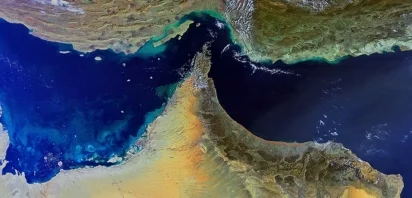
The Strait of Hormuz, a narrow yet critical waterway, plays a pivotal role in the global economy. 🌍 Carrying almost a fifth of the world's oil, its significance extends beyond simple geography, acting as a barometer for international stability. Recent tensions have exposed the vulnerabilities of the rules-based global order, highlighting geopolitical fractures and moral contradictions.
The Strategic Importance of Hormuz
The Strait of Hormuz is more than just a passage; it's the lifeline of global energy supplies. Any disruption here sends shockwaves through the international markets. Recently, US-Israeli strikes on Iran catalyzed a crisis that has reverberated worldwide. Iran's response, characterized by a blockade, has further strained global supply chains. Oil prices have surged, impacting economies from Europe to Africa.
Economic Ripples and Global Repercussions
The crisis in Hormuz has led to a drastic decline in maritime traffic, dropping from around 130 to just a handful of daily transits. This has caused oil prices to soar, with some refiners paying nearly $150 per barrel. Such spikes have triggered inflationary pressures, especially in Europe, and increased food insecurity in vulnerable regions of Africa. Asia faces fuel rationing risks, further complicating the global economic landscape.
Diplomatic Stalemates and Security Council Dynamics
In response to the crisis, Bahrain's efforts to shepherd a UN Security Council resolution were thwarted by vetoes from China and Russia. This move redefined the narrative and showcased the rising influence of non-Western powers. Their vetoes were a strategic response to what they deemed selective enforcement of international law by the West.
Legal and Moral Paradoxes
The unfolding situation presents a legal conundrum. The UN Charter prohibits the use of force without Security Council approval. However, the initial strikes on Iran have been contested as lacking such authorization. Iran's blockade of Hormuz, framed as self-defense, further complicates the legality. This scenario reflects a broader issue of asymmetric application of international laws.
A Fractured Global Order
The Hormuz crisis is part of a broader pattern of geopolitical tension. From the South China Sea to global digital infrastructure, power is increasingly exerted through control over trade routes and technology. This shift threatens to undermine international law, placing human security at the mercy of geopolitical calculations.
Reactions and Implications
For nations across Asia, Africa, and Latin America, the crisis underscores grievances about biased applications of international law. The vetoes in Hormuz echo past instances, such as protections for Israel regarding Gaza, highlighting a system where power often trumps principle.
The Human Cost and Search for Victory
Beyond strategic maneuvers, the crisis has inflicted real human suffering. Civilian shipping has been jeopardized, and aid deliveries to conflict zones delayed. The burden of escalating prices and disrupted trade falls disproportionately on ordinary people, raising questions about what constitutes "victory."
Conclusion: The Path Forward
The Hormuz crisis is a stark reminder of the fragility of the rules-based order. It challenges policymakers to confront systemic flaws in international governance. Long-term stability will require a commitment to consistent rule enforcement and a reevaluation of current geopolitical strategies.
As the world watches the unfolding events, the need for a cohesive and equitable international order becomes ever more urgent. The lessons from Hormuz must guide future diplomatic efforts to ensure global peace and security.
You May Also Like

Geopolitical Analysis
Saudi Arabia's Bold Minerals Strategy
July 1, 2026
Geopolitical Analysis
Strategic Challenges in Securing the Strait of Hormuz
June 30, 2026
Geopolitical Analysis
Sovereignty, Airpower & Alliance Integration Limits
June 30, 2026
Geopolitical Analysis
Myanmar: A Renewed Frontline in India-China Tensions
June 29, 2026