Category:
Geopolitical AnalysisEra of Strongman Diplomacy Reshapes US–Vietnam Ties
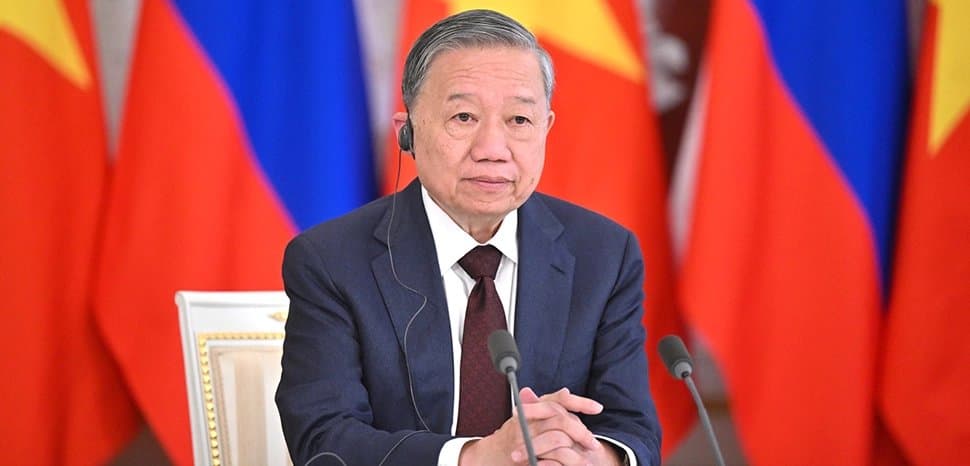
In the dynamic landscape of international relations, the rise of charismatic leaders often marks significant shifts in geopolitical strategies. The ascent of To Lam in Vietnam is one such development, signaling the dawn of a new era in US–Vietnam relations. With an unprecedented consolidation of power, Lam's leadership could redefine Hanoi's foreign policy approach, especially towards Washington. 🌏✨
A Shift in Leadership Dynamics
To Lam has emerged as a pivotal figure in Vietnam's political arena, centralizing power in a manner unseen since the postwar era. This shift from a collective leadership model to a more concentrated power structure is expected to accelerate decision-making processes. The newly formed 19-member Politburo underscores this transformation, hinting at an imminent confirmation of Lam as President.

Economic Ambitions and Foreign Policy
Lam's leadership is not just about political dominance; it is intricately linked to an ambitious economic plan. Vietnam aims for an annual growth of 10% or more from 2026 to 2030, focusing on high-tech manufacturing, digital transformation, and private-sector growth. Achieving this requires securing foreign capital, technology, and market access, particularly from the United States.
Engaging with the US
Lam's pragmatic foreign policy is evident in his swift acceptance of a US invitation to join a "Board of Peace," a move that highlights his readiness to engage with Washington. This approach is driven by Vietnam's need for stable US relations to support its economic modernization goals. Yet, this engagement is complex, as Vietnam continues to balance its relations between the US and China.
Navigating the US–China Balance
Vietnam's geopolitical strategy has long involved maintaining a delicate balance between two major powers: the United States and China. As the largest trading partner, China holds significant influence, while the US is Vietnam's largest export market and a critical source of technology and investment. Lam's centralized power could either enhance this balancing act or reduce the scope for internal debate that moderates policy shifts.
Potential Risks and Opportunities
While Lam's consolidation may accelerate reforms, there are risks associated with a highly centralized leadership. The lack of policy feedback channels could lead to significant missteps, particularly in areas like financial regulation or digital governance. Vietnam's economic success has historically been built on cautious experimentation, and any deviation from this approach could have substantial consequences.
Constructive Engagement
For the United States, the challenge will be to engage Lam's Vietnam in ways that support reform without inciting nationalist backlash. Constructive engagement in areas like technology transfer, clean energy, maritime security, and education could strengthen Vietnam's growth trajectory and global integration. Conversely, aggressive pressure over trade imbalances could hinder Lam's reform agenda.
Conclusion: A New Phase of Development
Lam's rise reflects a confident Vietnamese leadership poised to enter a new development phase. By centralizing authority, Vietnam seeks to expedite its economic and strategic goals, requiring coherence and political strength at the helm. As the US navigates its relationship with Vietnam, it must consider the delicate balance of supporting economic reforms while respecting Vietnam's independent foreign policy stance.
In this era of strongman diplomacy, the US–Vietnam ties are being reshaped with potential for both growth and challenges. As global dynamics continue to evolve, the strategic choices made by Lam and his administration will undoubtedly play a crucial role in shaping the future of Southeast Asia's geopolitical landscape. 🌟
You May Also Like

Geopolitical Analysis
Saudi Arabia's Bold Minerals Strategy
July 1, 2026
Geopolitical Analysis
Strategic Challenges in Securing the Strait of Hormuz
June 30, 2026
Geopolitical Analysis
Sovereignty, Airpower & Alliance Integration Limits
June 30, 2026
Geopolitical Analysis
Myanmar: A Renewed Frontline in India-China Tensions
June 29, 2026