Category:
Geopolitical AnalysisFrom Tehran to Moscow: Kremlin Under Siege
A New Era of Vulnerability
In an unprecedented geopolitical shift, the assassination of Iran's Supreme Leader Khamenei on February 28 has sent shockwaves through authoritarian regimes worldwide. This event did not just mark a tactical success; it underscored a new strategic vulnerability. The method used to track and eliminate Khamenei, reportedly through Tehran's own surveillance infrastructure, raises alarming questions for similar regimes. If such a breach can occur in Tehran, it could happen anywhere. 📸
Moscow's Reaction: A Sign of Weakness?
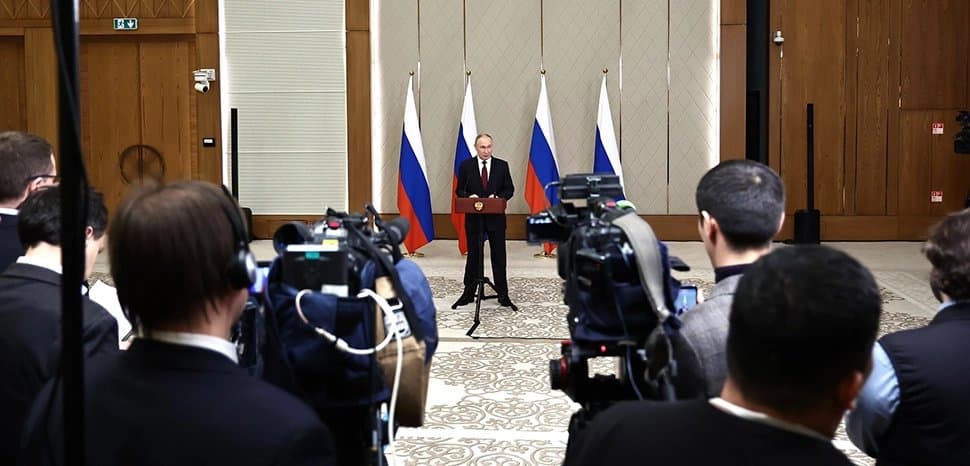
Russia, under President Vladimir Putin, is now on high alert. Recent actions, such as the reduction in Putin's public appearances and the establishment of a security perimeter around his Sochi residence, suggest a regime in survival mode. These steps reflect a government more concerned with internal security than projecting strength. Moscow's cautious behavior is a stark reminder of how authoritarian regimes can crumble when their leaders feel threatened.
The Strategic Implications of Tehran's Breach
The ramifications extend beyond personal security. The Caspian Sea, a critical smuggling route for Iranian and Russian military supplies, has become a hotspot of international tension. On March 18, Israeli forces executed a strike on Iranian naval vessels in the Caspian, disrupting a vital supply line. This action not only severed crucial military logistics; it sent a clear message to Moscow about the vulnerabilities of its alliances.
An Emerging Alliance Against Moscow
As tensions escalate, new alliances are forming. Ukraine, having honed its drone warfare capabilities against Iranian technology, is now collaborating with Israel on defense strategies. This cooperation hints at an exchange of military intelligence that could further destabilize Russian interests. The partnership between Israel and Ukraine represents a strategic realignment that Moscow can ill afford to ignore.
Domestic Instability: Cracks in the Kremlin
Internally, Russia's political landscape is shifting. The recent manifesto by Ilya Remeslo, a former pro-Kremlin lawyer, criticizing Putin's weakening grip on power, highlights growing dissent within Russia. The swift institutional response—his admission to a psychiatric facility—reveals a regime that still relies on Soviet-era tactics to silence opposition. However, such measures cannot mask the underlying fragility of Putin's rule.
The Fragile Foundation of Putin's Regime
Unlike Iran, Russia lacks the institutional resilience to withstand leadership changes. There is no clear succession plan or ideological framework to ensure continuity. Putin's governance is a personalist regime dependent on his persona, making it inherently unstable. Historical patterns show that regimes without structural integrity often face sudden collapse rather than gradual decline.
Military Stalemate: The Battlefield Reality
On the military front, Russia's strategic position is deteriorating. Ukraine's recent territorial gains and the failure of Russia's winter offensive underscore the shifting momentum. With Russian losses surpassing new recruits, the Kremlin faces a protracted conflict against an increasingly assertive adversary.
The Looming Threat of Regime Collapse
Authoritarian regimes often maintain a facade of strength, but the real telltale signs lie in their actions. Fortified residences, restricted communications, and the suppression of dissenting voices are all indicators of a regime under pressure. For Putin, maintaining the status quo in Ukraine may become a more viable option than pursuing an uncertain victory.
Conclusion: A Geopolitical Turning Point
As the walls close in on the Kremlin, the global geopolitical landscape is witnessing a significant transformation. The interactions between Tehran, Moscow, and emerging alliances set the stage for a new era of international relations. The outcome of these developments will not only shape the future of these nations but also influence global political dynamics in the years to come. 🌍
You May Also Like

Geopolitical Analysis
Saudi Arabia's Bold Minerals Strategy
July 1, 2026
Geopolitical Analysis
Strategic Challenges in Securing the Strait of Hormuz
June 30, 2026
Geopolitical Analysis
Sovereignty, Airpower & Alliance Integration Limits
June 30, 2026
Geopolitical Analysis
Myanmar: A Renewed Frontline in India-China Tensions
June 29, 2026