Category:
Geopolitical AnalysisGeopolitics of the GIUK Gap: The Past, Present, Future
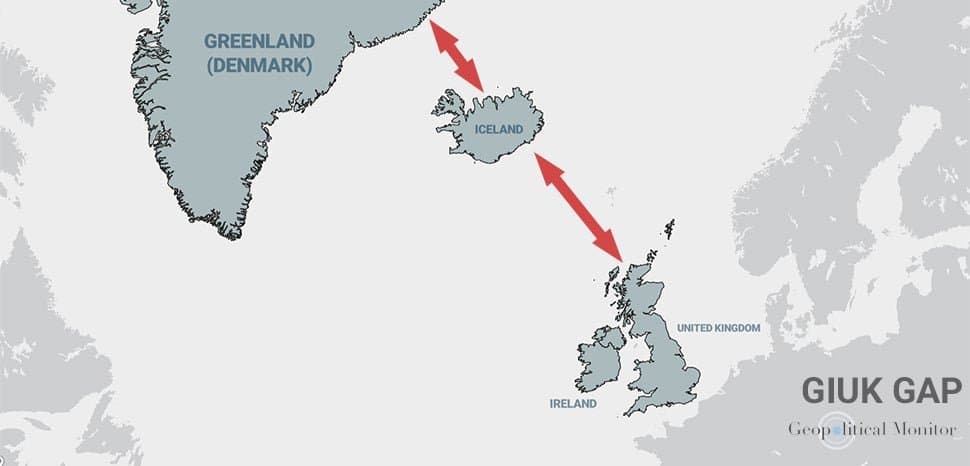
Understanding the GIUK Gap
The GIUK Gap, a strategically crucial maritime corridor, stretches between Greenland, Iceland, and the United Kingdom. This passage has served as a vital chokepoint in the North Atlantic, influencing naval strategies and geopolitical dynamics for decades. Historically, the GIUK Gap has been essential for naval operations, acting as a bridge between the Arctic and Atlantic Oceans, and facilitating movement between North America and Europe.

A Historical Perspective 📜
During the World Wars, the GIUK Gap's strategic importance came to the fore. Control over this passage was crucial for securing transatlantic supply routes, the lifelines of the Allied forces. The occupation of Iceland and Greenland by Allied forces during World War II was a strategic move to monitor and defend against German U-boats attempting to disrupt these critical lanes. Events like the Battle of the Denmark Strait underscore the importance of this maritime corridor.
Cold War Era: A Strategic Chokepoint 🌐
The Cold War era elevated the GIUK Gap to a frontline in NATO's defense strategy. It became a chokepoint for detecting Soviet submarines as they tried to access the Atlantic from bases on the Kola Peninsula. The deployment of the Sound Surveillance System (SOSUS) and maritime patrol aircraft like the P-3 Orion were pivotal in anti-submarine warfare (ASW). These technologies provided early warning of Soviet movements, enhancing NATO's defensive posture.
Post-Cold War Shifts 🌍
Following the Soviet Union's collapse, the perceived threat diminished, leading to a shift in NATO's focus towards expeditionary operations in regions like the Balkans, Middle East, and Africa. This pivot resulted in reduced investments in ASW capabilities and a decline in operator skills. However, the GIUK Gap's strategic importance never entirely vanished.
Modern Dynamics and Emerging Threats 🔍
In recent years, the GIUK Gap has regained its strategic prominence amid renewed Russian naval activity and Arctic expansion. The melting Arctic, a result of climate change, presents both opportunities and challenges. It allows for greater Russian naval maneuverability, potentially bypassing traditional chokepoints, and complicating NATO’s containment efforts.
However, this also increases Russia's vulnerability. NATO can leverage its control of the GIUK Gap to enhance surveillance of Russian movements and challenge Russia's bastion defense strategy in the Barents Sea. Consequently, Russia has intensified its military presence in the Arctic, reopening Soviet-era bases and deploying advanced defense systems.
The Future of the GIUK Gap 🔮
Looking ahead, the GIUK Gap will likely remain a focal point in geopolitical strategies. The introduction of advanced Russian submarines, such as the Yasen- and Borei-class, highlights Moscow's commitment to maintaining maritime superiority. These submarines, equipped with cutting-edge stealth technologies and advanced weaponry, pose a significant challenge to NATO's security framework.
Conclusion: Navigating the Chokepoint 🚢
The GIUK Gap's relevance in geopolitics is set to continue. As Arctic ice recedes and global naval dynamics shift, control over this chokepoint will be crucial for maintaining strategic balance. It serves as both a barrier and a gateway, making it a focal point for future maritime strategy discussions. Understanding its past and present helps us prepare for the strategic challenges ahead.
With nations like Russia intensifying their Arctic militarization efforts, NATO must adapt its strategies to ensure continued dominance and security in the North Atlantic.
For more insights into geopolitical dynamics, keep exploring and stay informed!
You May Also Like

Geopolitical Analysis
Saudi Arabia's Bold Minerals Strategy
July 1, 2026
Geopolitical Analysis
Strategic Challenges in Securing the Strait of Hormuz
June 30, 2026
Geopolitical Analysis
Sovereignty, Airpower & Alliance Integration Limits
June 30, 2026
Geopolitical Analysis
Myanmar: A Renewed Frontline in India-China Tensions
June 29, 2026