Category:
Geopolitical AnalysisGeopolitics Weekly: Iran, Japan & Balikatan

In the dynamic world of geopolitics, every week brings new developments that ripple across borders and affect global power structures. This week's spotlight is on the escalating tensions in Iran, Japan's strategic shift in arms sales, and the impactful Balikatan War Games in the Asia-Pacific. 🌍 Let's dive into these unfolding narratives.
The Evolving Conflict: Iran War 🌟
The geopolitical landscape in Iran continues to be tumultuous, with recent escalations threatening regional stability. Over the past week, military engagements have intensified, drawing international attention. The conflict is a focal point for global powers, each with vested interests in the outcome.
Historical Context
Iran's geopolitical significance stems from its strategic location and vast oil reserves. Historically, it has been a center of power struggles, from ancient empires to modern-day conflicts. Understanding this backdrop is crucial for analyzing current tensions.
Current Developments
Recent weeks have seen a surge in military activities, with reports of skirmishes at key border areas. These incidents have heightened fears of a broader conflict, prompting diplomatic efforts to de-escalate the situation.
Japan's Strategic Shift: Arms Sales Initiative 🔥
Japan's defense industry has been making headlines as it pivots towards increasing arms exports. This shift marks a significant departure from Japan's post-World War II pacifist policies.
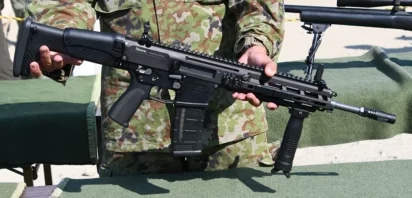
The Rationale Behind the Move
Japan's decision to expand arms sales is driven by several factors:
- Economic Growth: The defense sector is poised to boost economic growth through increased exports.
- Regional Security: Amidst rising regional threats, bolstering defense capabilities of allies is seen as a strategic necessity.
- Technological Advancement: Japan aims to leverage its advanced technology to remain competitive in the global arms market.
Implications for Global Security
This policy shift could alter regional power dynamics, particularly in the Asia-Pacific, where tensions over territorial disputes are prevalent. It also aligns with Japan's broader strategy to strengthen alliances and counterbalance regional adversaries.
Balikatan War Games: A Show of Strength ✨
The annual Balikatan exercises between the United States and the Philippines have gained prominence as a demonstration of military cooperation in the Asia-Pacific.
Objectives and Impact
These exercises aim to enhance interoperability between the two nations' armed forces, focusing on joint defense strategies and humanitarian assistance. In the current geopolitical climate, Balikatan serves as a crucial countermeasure against potential threats in the region.
Broader Regional Context
The Asia-Pacific region is a hotspot for geopolitical tensions, with territorial disputes in the South China Sea and North Korea's nuclear ambitions. Balikatan reinforces the US-Philippine alliance and signals a commitment to maintaining regional stability.
Conclusion: Navigating Complex Geopolitical Waters
As these events unfold, they underscore the intricate web of international relations and the constant flux of geopolitical alliances. Understanding these dynamics is essential for predicting future trends and assessing the impact on global peace and security.
In the coming weeks, keep an eye on:
- Diplomatic Efforts: Will international diplomacy succeed in de-escalating the Iran conflict?
- Japan's Arms Sales: How will Japan's new defense strategy influence regional security?
- Asia-Pacific Alliances: Will Balikatan strengthen US influence in the region?
By staying informed and analyzing these developments, we can better anticipate the challenges and opportunities that lie ahead in the geopolitical arena. 🌐
You May Also Like

Geopolitical Analysis
Saudi Arabia's Bold Minerals Strategy
July 1, 2026
Geopolitical Analysis
Strategic Challenges in Securing the Strait of Hormuz
June 30, 2026
Geopolitical Analysis
Sovereignty, Airpower & Alliance Integration Limits
June 30, 2026
Geopolitical Analysis
Myanmar: A Renewed Frontline in India-China Tensions
June 29, 2026