Category:
Geopolitical AnalysisIndia's Strategic Bet: Chabahar Port's Role
Introduction: Navigating Geopolitical Tides 🌊
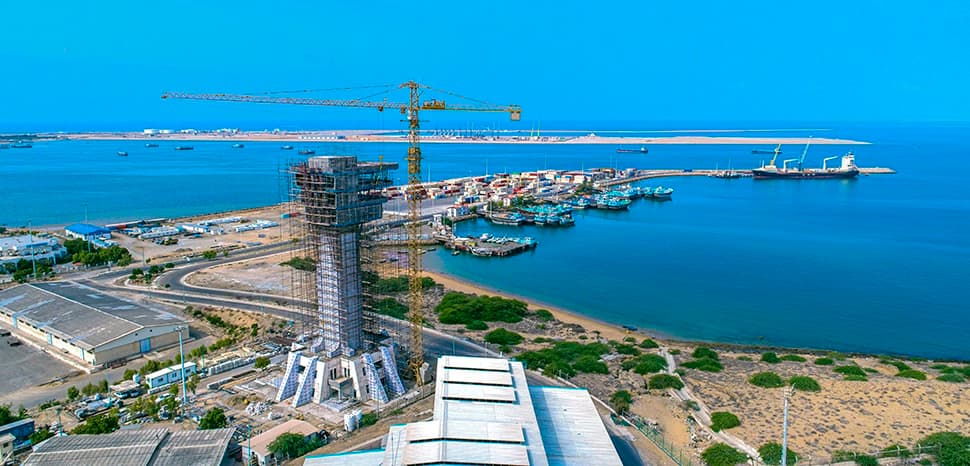
In the intricate web of global diplomacy, India's strategic moves are under the microscope. With the escalating tensions surrounding Iran, India finds itself at a crossroads. Chabahar Port, a vital investment by India, holds potential as a strategic anchor in this geopolitical chess game. But can it truly secure a pivotal role in India's Gulf calculus?
Chabahar Port: A Geopolitical Gateway 🚢
Chabahar Port is not just a standalone infrastructure project. It's a gateway to broader Eurasian connectivity, linking India to Afghanistan and Central Asia while bypassing Pakistan. This multi-modal corridor, once a mere connectivity initiative, now carries significant geopolitical weight. By facilitating cargo movement from India through Iran into Central Asia, it challenges traditional trade routes, creating a new economic lifeline.
Strategic Interests and Global Dynamics 🌍
For India, Chabahar is more than a trade hub; it's a strategic asset. The port offers a rare opportunity for India to exert influence without overt political gestures. As Iran faces economic sanctions, Chabahar provides economic breathing space, attracting external investment and offering a hedge against over-dependence on China. This unique intersection of interests also allows India to play a subtle yet crucial role in regional stability.
US-Iran-India Triangular Dynamics 🔄
Historically, the United States has permitted Indian investment in Chabahar through limited sanctions waivers. This approach allows the US to maintain indirect influence in Iran while countering China's strategic moves in the region. The overlapping interests of the US and Iran at Chabahar create a platform for limited cooperation, even amidst broader geopolitical confrontations.
India's Diplomatic Dance: Navigating Challenges and Opportunities 💬
The deepening Gulf crisis amplifies Chabahar's significance. With Russia emerging as a potential mediator, India risks being sidelined unless it acts decisively. Here are strategic steps India can take to cement its role:
- Secure US Sanctions Waivers: India must negotiate a quiet understanding with the US for targeted sanctions waivers, facilitating Chabahar-linked activities.
- Assure Maritime Stability: Obtain commitments from Iran to keep Chabahar insulated from political leverage and ensure uninterrupted maritime flows through Hormuz.
- Multilateralize the Corridor: Engage Central Asian stakeholders like Kazakhstan, transforming Chabahar into a regional asset. This inclusion enhances cargo volumes and raises disruption costs for all parties involved.
The Future of Chabahar: A Hub for Cooperation 🤝
Chabahar's potential in conflict mitigation is rooted in its ability to align diverse interests. As the global economy grapples with trade disruptions, Chabahar stands as a beacon for incremental diplomacy. The port's technical and economic focus allows for cooperation without high political costs, offering a pragmatic platform for testing US-Iran relations.
Conclusion: India's Strategic Imperative 🚀
India's role in the Chabahar corridor is not just an opportunity but an imperative. By anchoring its strategic presence here, India can navigate the complex geopolitical currents of the Gulf. The question is not whether India should act, but whether it can do so before other powers occupy the space. As global dynamics shift, Chabahar remains a pivotal node in India's geopolitical strategy.
The stakes are high, and India's next moves will determine its influence in the region. As the world watches, Chabahar could be the key to unlocking a new era of diplomatic engagement and economic prosperity.
You May Also Like

Geopolitical Analysis
Saudi Arabia's Bold Minerals Strategy
July 1, 2026
Geopolitical Analysis
Strategic Challenges in Securing the Strait of Hormuz
June 30, 2026
Geopolitical Analysis
Sovereignty, Airpower & Alliance Integration Limits
June 30, 2026
Geopolitical Analysis
Myanmar: A Renewed Frontline in India-China Tensions
June 29, 2026