Category:
International RelationsIR Theory's Insights on the Gaza Conflict
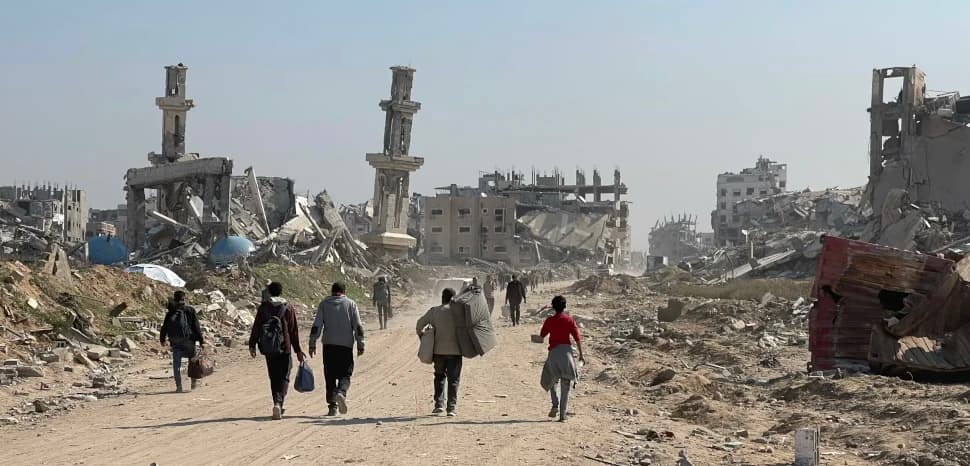
The ongoing conflict in Gaza serves as a complex case study in international relations (IR) theory, offering a lens through which the varied responses to this crisis can be understood. The frameworks of realism, liberal institutionalism, and constructivism each provide distinct perspectives, revealing how deeply entrenched theories shape the behavior of states and international actors.
Realism: Power Over Principles
From a realist viewpoint, the situation in Gaza is a stark illustration of a state prioritizing survival. Israel's actions, particularly in response to Hamas' attacks on October 7, 2023, which resulted in 1,200 deaths and the capture of 250 hostages, are seen as measures to ensure national security against an existential threat. Hamas' refusal to disarm and its strategy of embedding military operations within civilian areas highlight the asymmetric nature of this conflict. Realists argue that in such scenarios, normative constraints imposed by international law become secondary to strategic interests.
The U.S. Stance
The U.S. response, particularly under former President Trump's administration, exemplifies realism's influence. By suspending humanitarian conditionality on military aid to Israel, the U.S. prioritized strategic alliances over normative commitments, a move reflecting transactional diplomacy. However, this approach also raises concerns about long-term repercussions, including the erosion of the international order the U.S. helped establish.
Liberal Institutionalism: The Limits of Law
Liberal institutionalism offers a contrasting perspective, focusing on the role of international humanitarian law (IHL) designed for asymmetric conflicts. This framework emphasizes the importance of legal structures in moderating state behavior, regardless of the conflict's moral dimensions. Yet, in Gaza, the efficacy of these institutions has been questioned.

Institutional Challenges
Despite the International Criminal Court (ICC) issuing arrest warrants and the International Court of Justice (ICJ) mandating humanitarian access, compliance has been minimal. The reliance on U.S. enforcement highlights a critical weakness: without a powerful guarantor, legal mechanisms struggle to impose meaningful consequences. European attempts to exert pressure, such as Germany's arms embargo, were quickly reversed, illustrating the fragile nature of multilateral responses.
Constructivism: Norms and Expectations
Constructivism shifts focus from enforcement to the power of norms and shared beliefs. The Gaza situation underscores how the selective application of IHL affects global perceptions of legality and legitimacy. When norms are perceived as contingent rather than universal, they lose potency, influencing future state behavior.
Broader Implications
This shift in perception is not confined to Gaza. It signals to other states that adherence to international norms is negotiable, contingent on power dynamics. This recalibration of expectations can lower the threshold for transgression worldwide, as seen in other contentious regions like the South China Sea.
Conclusion: A Convergence of Theories
Despite their differences, realism, liberal institutionalism, and constructivism converge on one unsettling conclusion: power dynamics increasingly dictate international outcomes over established norms. The Gaza conflict not only tests these theoretical frameworks but also exposes the limitations of the current international system in addressing complex geopolitical issues. As global actors navigate these waters, the need for a re-evaluation of enforcement mechanisms and the strengthening of international norms becomes ever more critical. Moving forward, it is essential to consider how these frameworks can be adapted to better manage and resolve such conflicts, ensuring a more stable and just international order.
In the coming years, the challenge will be to reconcile these theoretical insights with practical policy interventions that uphold international law while acknowledging the realities of global power structures.
You May Also Like
International Relations
Japan-India Summit: New Alliances Emerge
July 6, 2026
International Relations
Canada-Ukraine Drone Deal: A Strategic Partnership
July 2, 2026

International Relations
Taiwan's Diplomatic Struggle for Global Recognition
June 26, 2026

International Relations
US-Brazil Relations Risked by Terrorist Designations
June 4, 2026