Category:
International RelationsJapan-India Summit: New Alliances Emerge
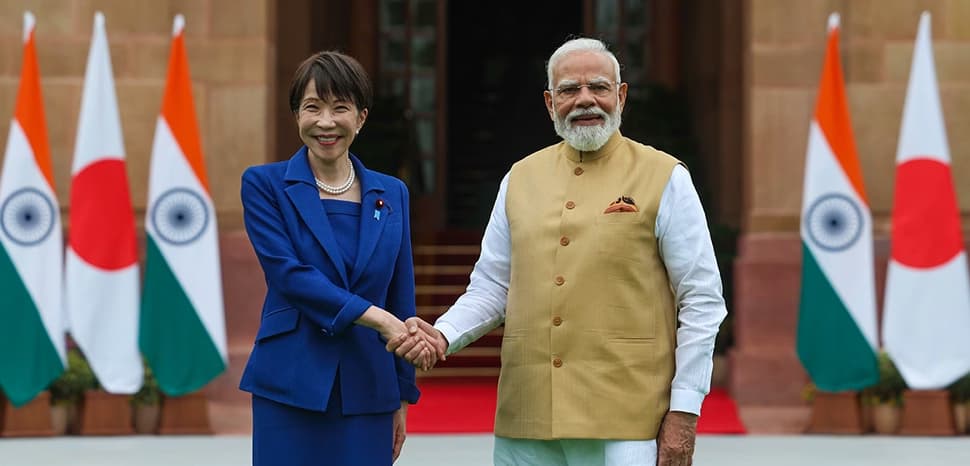
In recent years, the global geopolitical landscape has witnessed significant shifts, and the Japan-India summit serves as a testament to these changes. As the world observes the evolving dynamics between these two nations, it becomes evident that the summit is not just a diplomatic formality but a strategic maneuver to realign priorities amidst a rapidly changing international order.
Strengthening Economic Ties 🌏
The summit, marked by Japanese Prime Minister Sanae Takaichi's visit to India, highlighted a profound shift in Japan's foreign policy. The focus was on economic security, vital in an era of fragmented supply chains and wavering U.S. commitments. Japan seeks to tap into India's potential as a key partner, especially as China-centered supply chains dominate the market.
- Semiconductors and Critical Minerals: These sectors have become pivotal in Japan-India joint projects, aiming to reduce overdependence on China. India, under Prime Minister Modi, is positioning itself as a viable alternative manufacturing hub. The signing of nearly 120 private MoUs underscores the urgency and necessity of this collaboration.

Security and Defense Cooperation 🔒
Defense has always been a cornerstone of Japan-India relations. The summit reinforced India's indispensability to Japan's Free and Open Indo-Pacific (FOIP) vision, especially as the U.S. under Trump's administration shows a lukewarm stance towards the Quad.
- Hybrid Security Strategy: This includes maritime security and connectivity initiatives linking the Bay of Bengal to India's northeast, aiming to compete with China's Belt and Road Initiative (BRI). As the U.S. signals uncertainty about the Quad, Japan and India are compelled to form a more robust alliance.
Energy Resilience Initiatives 💡
Energy security was a critical agenda item, with both nations focusing on decarbonization and diversification strategies to mitigate reliance on volatile energy sources.
- POWERR Asia Initiative: Japan's Partnership on Wide Energy and Resources Resilience Asia initiative aligns with India's interest in biogas and renewable energy. This collaboration not only promotes energy diversification but also advances technological exchanges.
Navigating Away from Trump's America 🌐
The summit's underlying theme was a subtle departure from America's unpredictable policies under Trump. Japan and India are keen on establishing a framework that offers tangible outcomes beyond rhetoric.
- AI Governance and Technology: Addressing AI governance is crucial as both nations need reliable partners outside of Washington and Brussels. The focus is on translating strategic declarations into actionable projects, particularly in India's emerging semiconductor hubs and critical ports.
Conclusion: A Strategic Pivot 🌟
The Japan-India summit represents a strategic pivot in international relations. The emphasis is on building a credible, self-reliant framework that can withstand geopolitical uncertainties. As both countries work towards solidifying their partnership, the world watches closely to see if this alliance can offer more than just a temporary respite in the face of global challenges.
In summary, the Japan-India summit is not merely about optics but about forging a resilient partnership that can redefine the economic and security order in the Indo-Pacific region. As Japan and India move closer, they set an example for how nations can navigate the complexities of modern geopolitics.
You May Also Like

International Relations
Canada-Ukraine Drone Deal: A Strategic Partnership
July 2, 2026

International Relations
Taiwan's Diplomatic Struggle for Global Recognition
June 26, 2026

International Relations
US-Brazil Relations Risked by Terrorist Designations
June 4, 2026
International Relations
Indus Waters Treaty: A Year After Pahalgam
May 25, 2026