Category:
Geopolitical AnalysisIran War Reveals BRICS's Hidden Divisions
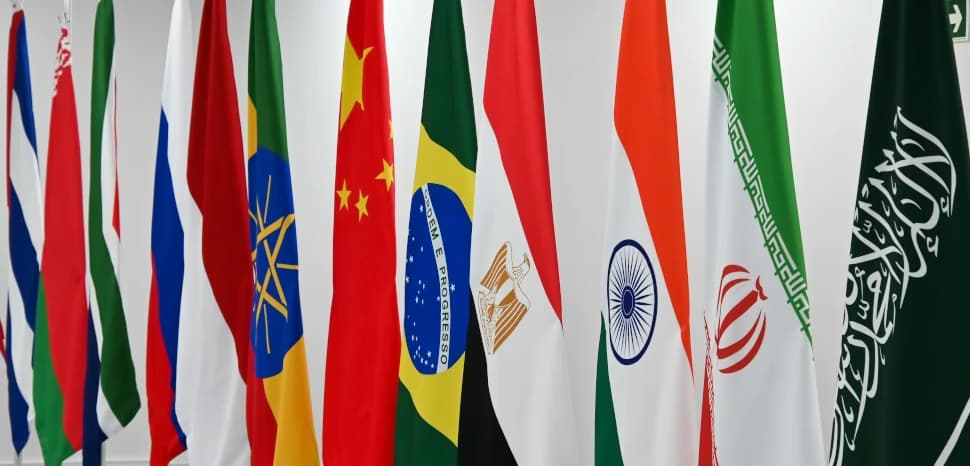
The unfolding conflict involving Iran has shed light on underlying tensions within BRICS, an economic and political coalition comprising Brazil, Russia, India, China, and South Africa. The recent expansion to include Iran, the United Arab Emirates, Ethiopia, Egypt, and Indonesia highlights the complexities of maintaining unity in this diverse group.
Iran War: A Catalyst for Revealing Fault Lines
The Iran war has become a litmus test for BRICS's cohesion, exposing divergent priorities among member nations. Historically, BRICS has been more about economic collaboration than a unified political front. This is evident as the group avoids taking a collective stance on the Iran conflict, reflecting the strategic priorities of its diverse members.

Divergent Interests Among Members
From the outset, BRICS members have held varied geopolitical aspirations. China views the coalition as a platform for multipolarity, seeking to reduce reliance on Western-dominated institutions like the IMF. Russia, particularly after Crimea's annexation in 2014, sees BRICS as a counterbalance to Western sanctions. In contrast, India aims to steer the group away from anti-Western rhetoric, focusing on economic resilience and development.
The Impact of Expansion
The inclusion of Iran and other new members has added layers of complexity to BRICS's operations. These nations bring their own regional conflicts and alliances, complicating the potential for a unified foreign policy. For instance, Iran seeks stronger political backing within BRICS, while Gulf states like the UAE have their own security concerns. This divergence makes it challenging for BRICS to present a cohesive stance on international issues.
The Strategic Role of BRICS
Despite its struggles with coherence, BRICS remains an influential player in global economics. It serves as a platform for major non-Western powers to collaborate on issues like finance, technology, and trade. The New Development Bank and initiatives for local currency trade exemplify areas where BRICS has achieved consensus.
Challenges and Opportunities
While expansion increases BRICS's geopolitical weight, it also dilutes its ability to act with one voice. The diverse interests of member states could lead to deadlock or vague statements on critical issues. This risk underscores the need for careful management of BRICS's institutional and political dynamics, as emphasized by India's Foreign Minister Jaishankar.
A Future of Selective Cooperation
The Iran war indicates that BRICS might evolve into a more flexible coordination forum, focusing on economic and diplomatic signaling rather than a unified geopolitical bloc. This shift could allow for selective cooperation where interests align, maintaining BRICS's relevance in a rapidly changing global landscape.
Conclusion: Navigating Internal Tensions
As BRICS navigates its internal tensions, the coalition's future hinges on its ability to balance expansion with consensus. While the Iran war has highlighted these challenges, it also offers an opportunity for BRICS to redefine its role on the world stage. By focusing on strategic economic partnerships and development goals, BRICS can continue to influence global affairs even amidst its internal contradictions.
You May Also Like

Geopolitical Analysis
Saudi Arabia's Bold Minerals Strategy
July 1, 2026
Geopolitical Analysis
Strategic Challenges in Securing the Strait of Hormuz
June 30, 2026
Geopolitical Analysis
Sovereignty, Airpower & Alliance Integration Limits
June 30, 2026
Geopolitical Analysis
Myanmar: A Renewed Frontline in India-China Tensions
June 29, 2026