Category:
Geopolitical AnalysisNetwork Over Structure: Rethinking Globalization
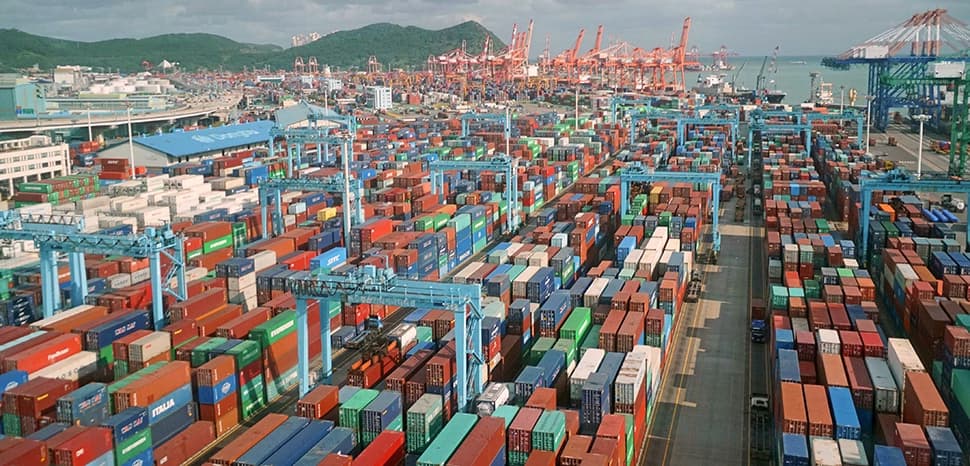
Globalization has long been portrayed as a binary choice between integration and isolation. However, the reality is far more nuanced. 📊 In the modern world, nations navigate this complex landscape by balancing structural dependence, integration gains, and vulnerability.
Understanding Globalization's New Dimensions
The traditional metrics of globalization, such as trade-to-GDP ratios and capital flows, offer a limited view. They fail to capture the nuanced positions countries hold within the global network. This is where a three-dimensional framework comes into play, assessing how nations participate in globalization and the value they derive from it.
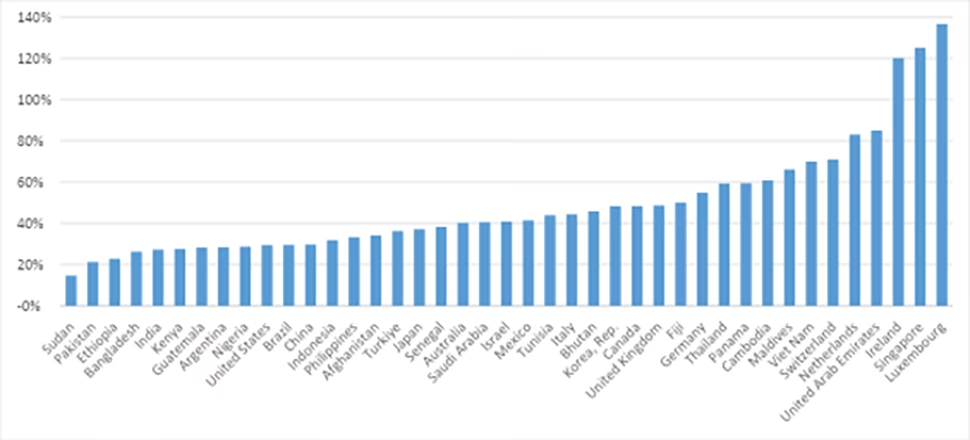
Structural Dependence on Globalization
Countries exhibit varying degrees of dependence on external markets, strategic imports, and foreign capital. This axis evaluates how vital international ties are for a country's economic sustainability.
- External Demand Dependence: How reliant is a country's economy on foreign demand?
- Strategic Import Dependence: Does the country depend on imported strategic goods?
- Financial Dependence: Is foreign financing crucial?

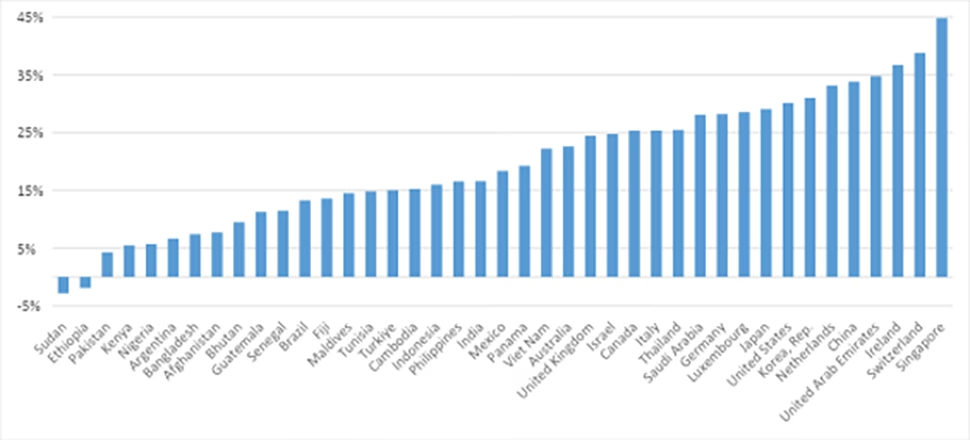
Integration Gains from Globalization
Participation in the global economy yields uneven rewards. Some nations gain technological prowess and financial centrality, while others may only provide low-value labor.
- Technological Sophistication: Nations like Germany and Japan excel here.
- Financial Centrality: New York and London remain pivotal financial hubs.
- Logistical Centrality: Countries controlling major shipping routes stand out.
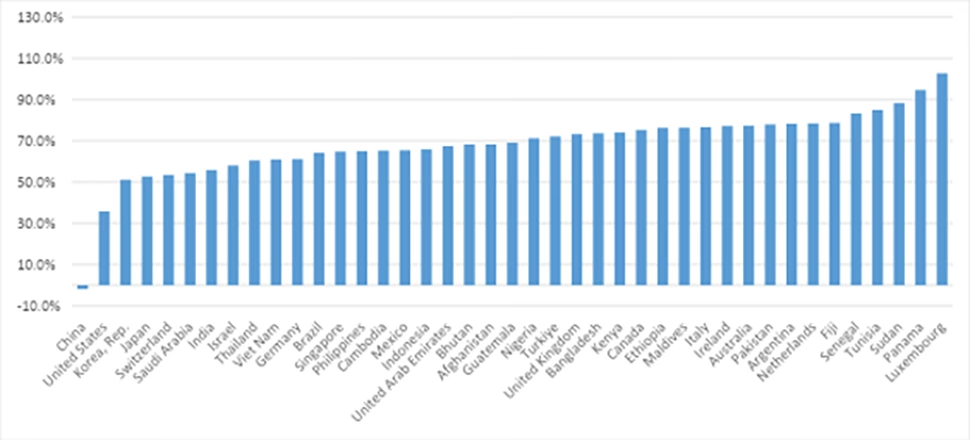
Vulnerability in Global Networks
Vulnerability assesses how replaceable or fragile a country's position is within global networks. It extends beyond mere dependence, looking at how resilient an economy is in the face of geopolitical shifts.
- Strategic Centrality: How essential is a nation within global supply chains?
- Financial Buffers: Can the country withstand economic sanctions?
The Shifting Geopolitical Landscape
In today's geopolitical climate, characterized by competition and supply-chain challenges, this framework becomes increasingly relevant. Understanding these axes helps in forecasting geopolitical shifts and economic resilience.
Case Studies: Varied Global Positions
- China and the USA: Despite high integration, both possess substantial internal markets, reducing dependency.
- Saudi Arabia: A resource exporter with moderate dependence, illustrating the complex interplay of globalization.
Practical Implications and Strategic Insights
For policymakers and businesses, recognizing these structural positions is crucial. It aids in strategic planning, risk assessment, and identifying potential vulnerabilities or advantages in the global market.
Key Takeaways
- Diversification: Reducing over-reliance on a single market or resource is vital.
- Investment in Resilience: Building financial buffers and enhancing strategic positioning can mitigate vulnerabilities.
Conclusion: Beyond the Binary
Moving beyond the simplistic integration-isolation binary allows for a more sophisticated understanding of globalization. By focusing on network structures rather than just trade volumes, nations can better navigate the complexities of the global economy.
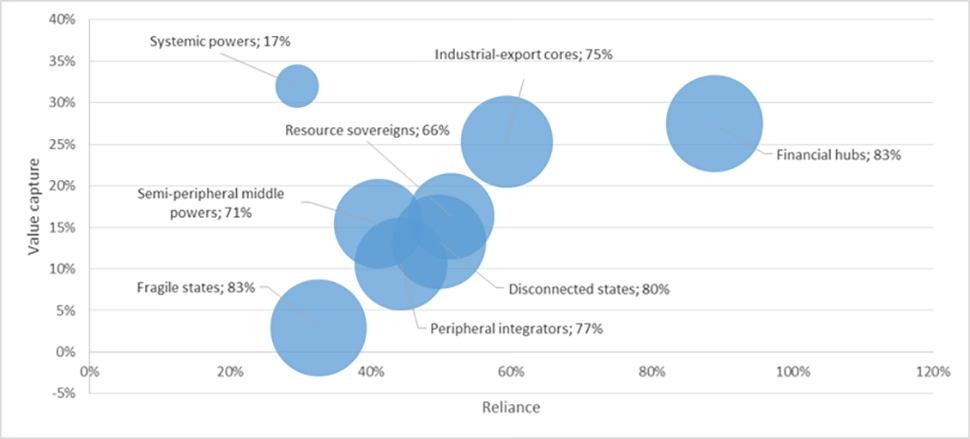
As globalization continues to evolve, nations must adapt by leveraging their unique positions within the global network, ensuring resilience and maximizing gains in an ever-changing world.
You May Also Like

Geopolitical Analysis
Saudi Arabia's Bold Minerals Strategy
July 1, 2026

Geopolitical Analysis
Strategic Challenges in Securing the Strait of Hormuz
June 30, 2026

Geopolitical Analysis
Sovereignty, Airpower & Alliance Integration Limits
June 30, 2026
Geopolitical Analysis
Myanmar: A Renewed Frontline in India-China Tensions
June 29, 2026