Category:
Geopolitical AnalysisSovereign Ecosystems: Distributed Authority's Global Impact
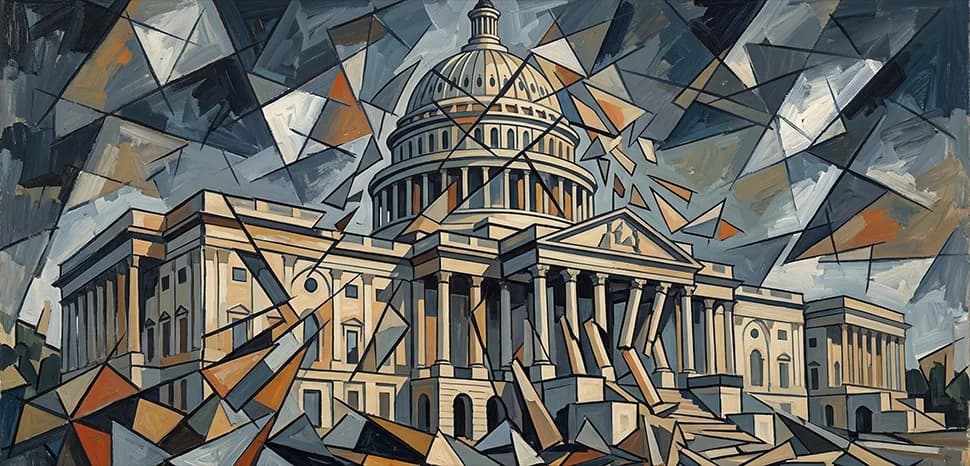
In an era where geopolitical landscapes are ever-evolving, the concept of "sovereign ecosystems" is reshaping our understanding of authority on the global stage. 🌍✨
Redefining Sovereignty in a Fragmented World
Across regions like the Middle East and North Africa, the traditional notion of state sovereignty is undergoing a transformation. Here, state institutions may appear weakened, but sovereignty hasn't vanished—it's merely relocated. 💡 Ministries remain, flags persist, and diplomats continue their dialogues, yet the true functions of power now lie with militias, local councils, and foreign patrons. This isn't a transient phase or merely a symptom of state failure. Instead, it's a robust, enduring configuration of distributed authority.

Distributed Authority Beyond the Middle East
The shift towards distributed authority isn't confined to the Middle East. Similar patterns are emerging in Africa and Eurasia, where power dynamics are increasingly negotiated rather than imposed. 🗺️ For global powers like the United States, grasping this new sovereign ecosystem is crucial. Energy security, migration governance, and counterterrorism efforts are all unfolding in landscapes where the state is merely one actor among many.
The Role of Local Actors
As state institutions falter, authority doesn't dissipate—it redistributes. Local armed groups, municipal councils, and economic brokers assume roles previously held by the central state. Their legitimacy isn't rooted in ideology but in functionality: they deliver order, access, and protection when formal institutions fall short. These actors manage infrastructure, regulate trade, and mediate disputes effectively, adapting swiftly to local needs.
Case Studies: Libya and the Sahel
Libya serves as a prime example of this architecture. While the government in Tripoli retains the symbols of sovereignty, real authority resides with a network of armed groups and international sponsors. Control over ports, refineries, and trade routes is maintained through negotiated arrangements blending coercion and economic brokerage.
Similarly, in the Sahel, community-based militias regulate taxation and enforce local security. These groups operate alongside the state, filling voids that centralized institutions cannot reach. Their authority is embedded in social networks and economic flows, not in formal mandates.
The Importance of Corridors
Across these regions, authority crystallizes around critical corridors—trade routes, fuel lines, and migration pathways. Control over these corridors equates to a form of sovereignty, determining economic flows and movement. This isn't mere fragmentation; it's a governance model that persists because it works efficiently, providing predictability where formal structures are lacking.
Resilience Through Redundancy
Distributed sovereignty is inherently resilient because it's redundant. With authority spread across multiple nodes, the failure of a single node doesn't trigger collapse. Actors can adjust alliances and governance practices swiftly, absorbing shocks better than centralized institutions. This isn't state collapse but a reconfiguration, where sovereignty becomes layered and negotiated, embedding itself deeply within local social and economic structures.
Global Implications and Power Dynamics
These sovereign ecosystems reshape how foreign actors exert influence. Countries like Turkey, the UAE, Russia, and China don't rely on fragile central governments; they engage with local networks performing sovereign functions. They manage bases and infrastructure through arrangements with local power actors, not with ministries that exist largely on paper.
In the Sahel, foreign missions increasingly interact with community-based militias regulating taxation and security. Russia's Wagner Group, for example, expands by exploiting this fragmentation, stepping into roles vacated by national institutions. China's infrastructure diplomacy often depends on local brokers controlling access to necessary resources.
Conclusion: Embracing New Realities
In conclusion, the notion of sovereign ecosystems signifies a profound shift in global geopolitics. As power dynamics become more distributed, understanding these configurations is essential for engaging effectively with international systems. 🌟
Western governments must adapt their frameworks to acknowledge these realities, moving beyond the traditional Weberian state view. By embracing this complexity, they can better navigate the landscapes of modern power and influence.
You May Also Like

Geopolitical Analysis
Saudi Arabia's Bold Minerals Strategy
July 1, 2026
Geopolitical Analysis
Strategic Challenges in Securing the Strait of Hormuz
June 30, 2026

Geopolitical Analysis
Sovereignty, Airpower & Alliance Integration Limits
June 30, 2026
Geopolitical Analysis
Myanmar: A Renewed Frontline in India-China Tensions
June 29, 2026