Category:
Geopolitical AnalysisThe Radev Risk: Bulgaria’s Strategic Balancing Act
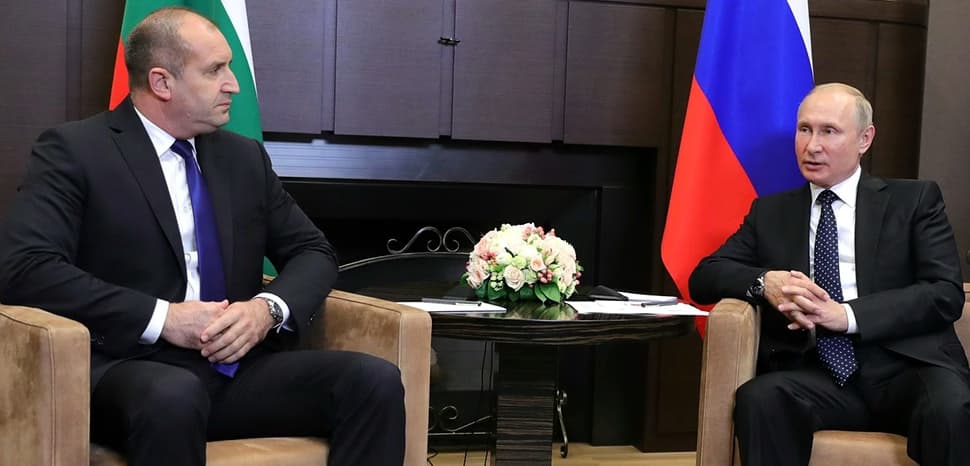
In a volatile geopolitical landscape, the recent Bulgarian elections marked a pivotal shift with the emergence of Progressive Bulgaria (PB) under the leadership of former president Rumen Radev. This political transformation can be seen as a response to longstanding instability, corruption, and oligarchic influence, setting the stage for Bulgaria's nuanced 'two chairs' strategy. 🎯
Bulgaria’s Political Shift: A New Dawn
The April elections, Bulgaria's eighth in five years, resulted in a significant victory for PB, which secured 131 out of 240 seats in the National Assembly. This victory over long-term political figures like Boyko Borisov signifies a potential recalibration of Bulgaria's political and geopolitical dynamics. The election results are viewed as a mandate for change, moving away from entrenched corruption and towards a more balanced international stance.
Understanding Radev’s Geopolitical Position
Radev's leadership is often superficially labeled as pro-Russian, a narrative that overlooks his complex geopolitical positioning. Despite some accommodating stances towards Moscow, Radev is a former Air Force commander and a US Air War College graduate, emphasizing a strategic blend of alliances. His party’s platform does not advocate for neutrality or a shift away from NATO and the EU but rather emphasizes active participation in these institutions.
The 'Two Chairs' Strategy
This strategy is characterized by a diplomatic balance, maintaining strong ties with the West while not alienating Russia. Historically, Bulgaria has adopted a “always with Europe, never against Russia” stance, which Radev seems to be renewing. This approach reflects Bulgaria's public opinion, where support for EU policies is tepid, and attitudes towards Russia are nuanced.
The Complexities of Radev’s Policies
Concerns about Radev's pro-Russian leanings are not without basis. His presidency has seen moments of opposition to EU's anti-Russian measures, particularly evident post-Ukraine invasion. Notably, Radev has resisted EU sanctions on Russian nuclear energy and arms transfers, framing such opposition as safeguarding Bulgaria's national interests.
Economic and Strategic Implications
Radev’s approach ties economic concerns with geopolitical decisions. PB’s campaign effectively linked rising fuel costs and inflation to the EU’s sanctions and energy policies, advocating for pragmatic relations with Russia. This narrative, although potentially disruptive to EU unity, presents a practical appeal to Bulgarian voters concerned with economic stability.
Future Prospects and Challenges
While some analysts speculate that Bulgaria might become a vulnerability for NATO, others view Radev’s strategy as a pragmatic response to Bulgaria’s geopolitical realities. The real risk lies in Radev's ability to merge economic grievances with a pragmatic foreign policy, potentially influencing NATO and EU dynamics.
Looking Ahead
The Radev administration's success rests on balancing domestic economic needs with international obligations. As Bulgaria navigates its path, its geopolitical strategy will continue to be scrutinized, offering insights into the broader challenges faced by nations at the crossroads of major power blocs.
In conclusion, Radev’s leadership and the ‘two chairs’ strategy illustrate a nuanced approach to international relations, one that seeks to harmonize diverse geopolitical interests while addressing domestic economic concerns. The coming years will be instrumental in determining how Bulgaria’s strategic balancing act impacts its role in both regional and global arenas.
You May Also Like

Geopolitical Analysis
Saudi Arabia's Bold Minerals Strategy
July 1, 2026

Geopolitical Analysis
Strategic Challenges in Securing the Strait of Hormuz
June 30, 2026
Geopolitical Analysis
Sovereignty, Airpower & Alliance Integration Limits
June 30, 2026
Geopolitical Analysis
Myanmar: A Renewed Frontline in India-China Tensions
June 29, 2026