Category:
Geopolitical AnalysisUS Export Controls and China's AI Stack Strategy

Navigating the AI Geopolitical Landscape 🌍
In the rapidly evolving world of artificial intelligence, the geopolitical tension between the United States and China is a critical focal point. The U.S. has established stringent export controls on AI technologies, aiming to maintain its competitive edge while influencing China's AI capabilities.
US Export Controls: Striking a Delicate Balance ⚖️
On January 13, 2026, the U.S. Commerce Department revised export restrictions on AI chips, specifically Nvidia's H200 and AMD's MI325X. These changes transitioned from a presumption of denial to a licensing process based on U.S. supply assurances and security protocols. This policy shift aims to create a narrow channel for sales that balances national security concerns with economic interests.
Despite these adjustments, the flow of AI chip exports to China has been minimal. The complexity of the licensing process and the ongoing national security reviews have stalled shipments. Additionally, Chinese authorities are reportedly discouraging domestic firms from relying on U.S. AI technology unless absolutely necessary.

China's 'Good Enough' AI Stack: A Strategic Pivot 🔄
In response to these restrictions, China has shifted its focus toward developing a 'good-enough' AI stack. This approach emphasizes domestic controllability over software and ensures a predictable supply of hardware, even if it compromises peak performance. By prioritizing self-reliance, China aims to reduce its dependency on U.S. technology.
Huawei, a key player in this strategy, is spearheading efforts to replicate the functionality of Nvidia's AI stack. Instead of competing chip-for-chip, Huawei focuses on systems-level solutions. The launch of the Atlas 900 A3 SuperPoD, a powerful AI cluster, exemplifies this approach. This cluster integrates 384 Ascend 910C accelerator chips across 16 racks, functioning cohesively as a single computer.
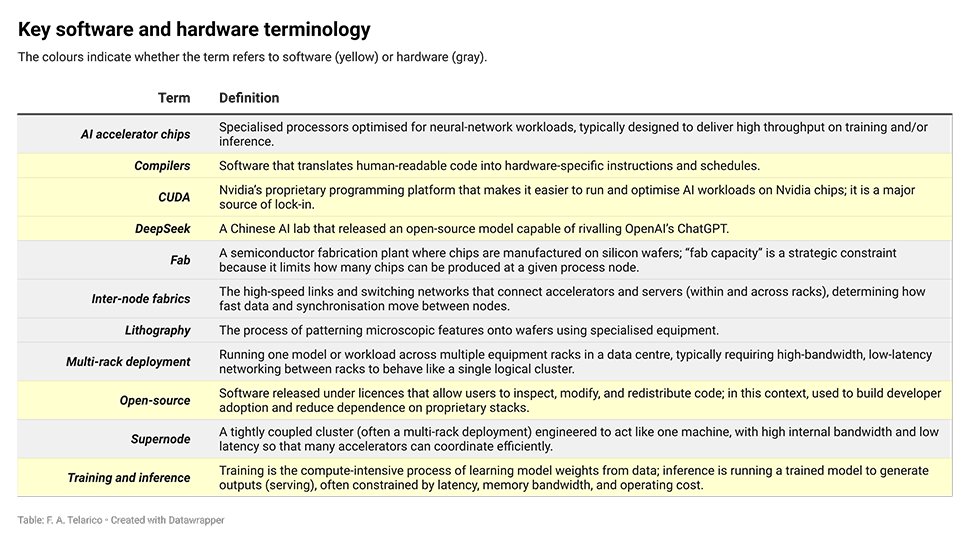
Implications and Future Outlook 🔍
The U.S. export controls underscore the complex interplay between national security and technology policy. While these measures aim to safeguard U.S. interests, they inadvertently push China towards self-sufficiency. This strategic pivot could reshape the global AI landscape, with potential shifts in market dynamics and innovation trajectories.
As China continues to refine its AI stack, the international community must closely monitor these developments. The ongoing rivalry between the U.S. and China in AI could influence global technological standards and the distribution of economic power.
Key Takeaways and Looking Ahead 📈
- US Export Controls: Aimed at maintaining U.S. dominance in AI while safeguarding national security.
- China's Response: Developing a 'good-enough' AI stack to ensure self-reliance and reduce dependency on U.S. technology.
- Market Impacts: Potential shifts in AI market dynamics and innovation as China pursues domestic alternatives.
The future of AI geopolitics remains uncertain, with both nations poised to make significant advancements. Stakeholders should anticipate further policy adjustments and strategic maneuvers as the U.S.-China AI rivalry continues to unfold.
You May Also Like

Geopolitical Analysis
Saudi Arabia's Bold Minerals Strategy
July 1, 2026

Geopolitical Analysis
Strategic Challenges in Securing the Strait of Hormuz
June 30, 2026
Geopolitical Analysis
Sovereignty, Airpower & Alliance Integration Limits
June 30, 2026
Geopolitical Analysis
Myanmar: A Renewed Frontline in India-China Tensions
June 29, 2026