Category:
Geopolitical AnalysisWexit: The Political Risk of Alberta Separatism

The notion of Alberta's independence, often termed "Wexit," has gained considerable momentum in recent years. While this movement has been simmering for decades, recent legislative changes and economic pressures have brought it back into the spotlight. 🌟
Historical Context and Current Dynamics
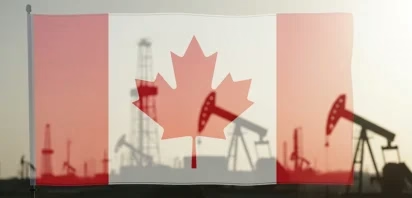
Alberta's separatist sentiment isn't a new phenomenon. It first gained traction in the 1980s during Pierre Trudeau's era, largely due to the National Energy Program (NEP), which imposed heavy taxes on Albertan oil. This created a sense of alienation among Albertans, who felt that the federal government favored eastern provinces. This sentiment resurfaced with the election of Justin Trudeau in 2015, especially with discussions around phasing out oil to achieve net-zero emissions. Alberta has been the largest net contributor to the federal budget, intensifying feelings of disenfranchisement. 💼
Legislative Shifts and Political Landscape
Recent amendments, such as Bill 54, the Election Statutes Amendment Act of 2025, have lowered the threshold for initiating provincial referenda, making it easier for citizens to express their opinions on independence. This legislative change, combined with ongoing economic grievances, has amplified the separatist discourse. 📜
Economic Pressures and External Influences
The US tariff policy has further strained Alberta's energy sector, which constitutes over 21% of the province's economy. This has led some separatist factions to seek favorable trade terms with the US, independent of Canada's federal structure. Notably, the Alberta Prosperity Project (APP) has engaged in discussions with the US State Department, signaling a move beyond symbolic gestures to practical negotiations. 🔄
Public Sentiment and Challenges
Although mainstream media often downplays the separatist threat, recent polling suggests a committed support base for independence in Alberta, comparable to Quebec. Despite this, significant obstacles remain. Dueling petitions highlight a divide in public opinion, with the anti-independence group, Forever Canada, reportedly gathering more signatures than the pro-independence Stay Free Alberta. 🗳️
Furthermore, legal challenges from First Nations communities have complicated the process, citing treaty rights violations. Economic opposition is also notable, with a Calgary Chamber of Commerce poll indicating a recession risk due to separatist discourse. This opposition is particularly damaging as it comes from the United Conservative Party's core voter base. 📉
Conclusion: The Path Forward
The future of Alberta's separatist movement remains uncertain. While legislative changes and economic pressures have fueled the movement, significant legal, economic, and public opinion hurdles persist. The outcome will heavily depend on Ottawa's response and the ability of pro-independence groups to address these challenges effectively. 🌐
The Wexit movement's trajectory offers a fascinating case study in regional politics, economic pressures, and the complexities of federal unity. As the situation evolves, stakeholders will need to navigate these challenges carefully to achieve their goals without destabilizing the broader Canadian federation. 🇨🇦
You May Also Like

Geopolitical Analysis
Saudi Arabia's Bold Minerals Strategy
July 1, 2026

Geopolitical Analysis
Strategic Challenges in Securing the Strait of Hormuz
June 30, 2026

Geopolitical Analysis
Sovereignty, Airpower & Alliance Integration Limits
June 30, 2026

Geopolitical Analysis
Myanmar: A Renewed Frontline in India-China Tensions
June 29, 2026