Category:
Geopolitical AnalysisWho Controls the Strait? Mahan's Missed Question
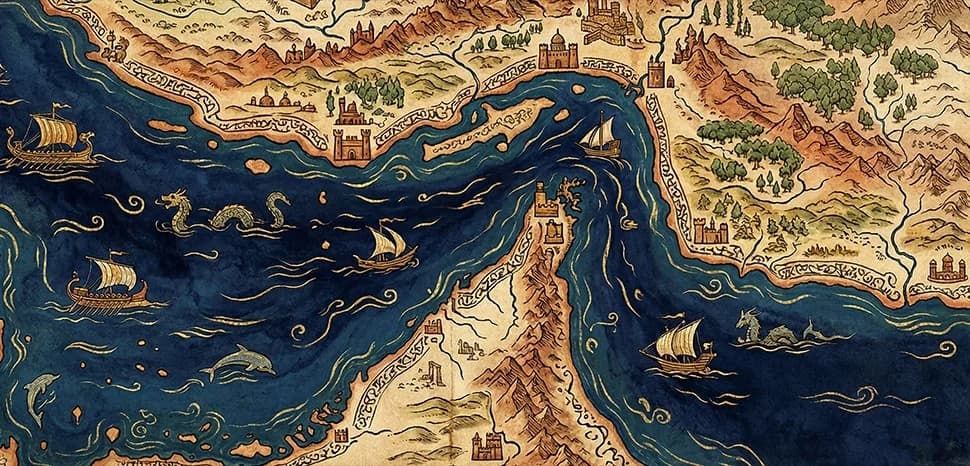
In the intricate dance of global geopolitics, certain questions remain evergreen, continually resurfacing with renewed vigor. One such question is: who truly controls the Strait of Hormuz? This query, once thought settled, has been reawakened by recent developments, challenging long-standing assumptions about maritime dominance and strategic chokepoints.
The Strategic Significance of the Strait 🌊
The Strait of Hormuz is a vital artery in the global energy supply chain. Approximately 20% of the world's traded oil and a similar percentage of liquefied natural gas pass through this narrow passage. Historically, control over such chokepoints has been equated with power, a notion heavily influenced by the teachings of Alfred Thayer Mahan, a 19th-century naval strategist who emphasized maritime power as a determinant of global influence.
However, recent shifts in the geopolitical landscape have prompted a reevaluation of this perspective. The unilateral decision by Iran in 2026 to allow only certain nations' vessels to transit the strait—based on bilateral relations rather than military might—has turned the traditional understanding on its head.
A Legal Perspective: Shaybani's Insight 📜
Centuries before Mahan, Muhammad ibn al-Hasan al-Shaybani, an eminent jurist in the Abbasid era, offered a different framework for understanding control over strategic passages. His work emphasized the nature of relationships between entities over mere military strength. Shaybani posited that the legal right of passage depended on the relationships underpinning it—an insight that resonates powerfully in today's context.
When Iran published its selective passage list, it was not military power but diplomatic relations that determined access. This approach echoes Shaybani's philosophy, where the right of transit is rooted in mutual agreements and understandings, not just force.
The Modern Implications of Ancient Wisdom ⏳
Iran's strategy has exposed a profound shift in how strategic control is understood. By prioritizing relational legitimacy over sheer naval power, Iran demonstrated an alternative framework that challenges the conventional Mahanian view. This approach also highlights the limitations of existing international laws, such as the United Nations Convention on the Law of the Sea (UNCLOS), which struggles to accommodate such relational dynamics.
Diverging Trends in Global Influence 🌍
The geopolitical implications of Iran's actions are far-reaching. The decline in the dollar's dominance in global reserves, coupled with the Gulf's reduced share of oil exports, underscores a broader shift in global economic power. These trends suggest a decoupling from traditional metrics of influence, with new players and sectors, such as semiconductor trade, gaining prominence.
These dynamics are not isolated to the Strait of Hormuz. They reflect a global trend where relational diplomacy, economic interdependence, and strategic alliances increasingly dictate control over critical resources and regions.
Conclusion: The Future of Strategic Control 🔮
The question of who controls the Strait of Hormuz is emblematic of a larger debate about power and legitimacy in international relations. As nations navigate this complex landscape, the insights of both Mahan and Shaybani offer valuable lessons. While military power remains a crucial factor, the ability to forge strategic relationships and leverage diplomatic networks is equally vital.
Looking ahead, the implications of Iran's approach will likely influence future geopolitical strategies. As countries reassess their positions, the potential for new alliances and frameworks to emerge is significant. The Strait of Hormuz serves as a reminder that in the world of geopolitics, the questions we ask—and those we overlook—can shape the course of history.
You May Also Like

Geopolitical Analysis
Saudi Arabia's Bold Minerals Strategy
July 1, 2026
Geopolitical Analysis
Strategic Challenges in Securing the Strait of Hormuz
June 30, 2026
Geopolitical Analysis
Sovereignty, Airpower & Alliance Integration Limits
June 30, 2026
Geopolitical Analysis
Myanmar: A Renewed Frontline in India-China Tensions
June 29, 2026