Category:
Geopolitical AnalysisASEAN's Non-Interference: A Shield for Scammers
The Hidden Crisis in the Mekong 🌊
In the heart of Southeast Asia lies the Mekong region, a bustling hub of economic activity and cultural exchange. However, beneath its picturesque landscapes and vibrant communities, the Mekong harbors a dark secret - it's a hotspot for transnational scam operations. These illicit networks generate billions annually, yet remain largely unchallenged, protected by a principle that was once a cornerstone of regional stability: ASEAN's non-interference norm.
Understanding ASEAN's Non-Interference Principle 🤝
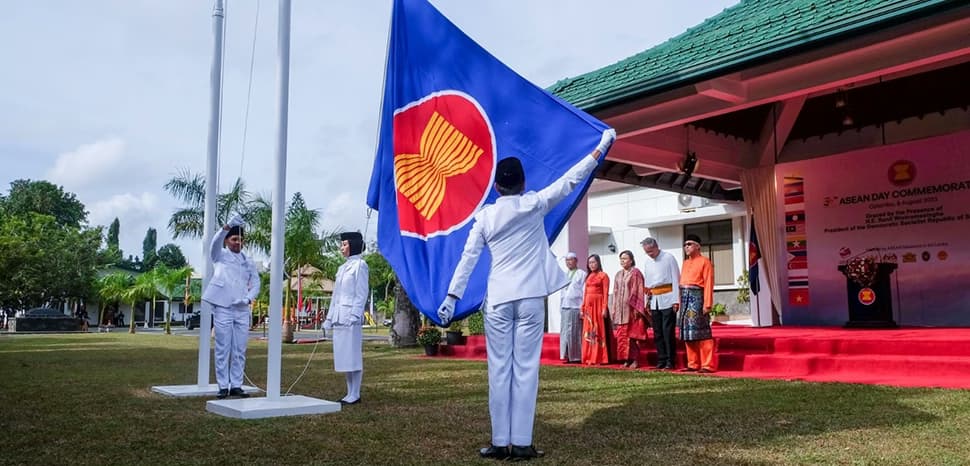
ASEAN, the Association of Southeast Asian Nations, was established in the post-colonial era with a foundational principle of non-interference. This norm was designed to prevent external powers from meddling in the internal affairs of member states, fostering regional harmony and cooperation. However, in today's complex geopolitical landscape, this principle has unintended consequences, particularly regarding transnational criminal networks.
The Economic Impact of Scam Networks 💰
A report by the UN Office of the High Commissioner for Human Rights in 2026 highlighted the staggering revenue generated by scam networks in Southeast Asia, estimating it at $64 billion annually. The Mekong region alone contributes $43.8 billion to this illicit economy, with 74% of documented scam compounds located here. These operations are not hidden; they are visible through satellite imagery and well-documented in international reports. Yet, ASEAN's institutional framework lacks the collective action needed to dismantle these networks effectively.
Case Studies: Myanmar, Laos, and Cambodia 📚
In October 2025, Myanmar's military conducted a highly publicized raid on KK Park, a known scam compound on the Thai border. Despite the media coverage, operations continued unabated, illustrating the superficial compliance often seen in ASEAN countries. In Laos, the Golden Triangle Special Economic Zone, managed by Zhao Wei, remains a hub for illicit activities. Despite US sanctions, Zhao was awarded a national development medal, highlighting the disconnect between international pressures and local actions.
Cambodia, facing persistent allegations of official complicity with scam operators, has seen little to no formal response from its ASEAN counterparts. This lack of accountability allows scam networks to exploit jurisdictional gaps, leading to what can be described as geographic arbitrage – simply moving operations across borders to escape enforcement.
The Role of External Actors 🌍
With ASEAN's limited capacity to address these issues, external actors have stepped in. China, for instance, has increased its enforcement presence through initiatives like the Lancang-Mekong Integrated Law Enforcement and Security Cooperation Center. While these efforts have yielded results, they also serve as a means for China to project influence in the region, raising concerns about sovereignty and regional dynamics.
The Financial Risks at Play 💸
The persistence of these networks poses significant financial risks to the region. The laundering of scam profits through underground banking networks threatens to place countries like Vietnam and Thailand on the Financial Action Task Force's grey list. This could lead to higher capital costs and damaged investment credibility, further underscoring the need for coordinated regional action.
Towards a Collaborative Solution 🌐
For ASEAN to effectively combat these networks, a shift in its institutional approach is necessary. Developing a shared intelligence framework, updating mutual legal assistance treaties for the digital age, and fostering greater collaboration with international partners are essential steps. Only through collective action can ASEAN hope to dismantle the entrenched scam networks and restore stability and trust in the Mekong region.
Conclusion: A Call for Change 🚨
As the Mekong region continues to grapple with the challenges posed by transnational scams, it is clear that ASEAN's non-interference principle must evolve. By fostering greater regional cooperation and leveraging international partnerships, ASEAN can transform its approach from passive observer to active enforcer, ensuring a safer and more prosperous future for all its member states. The time for change is now, and the world is watching. 🌟
You May Also Like

Geopolitical Analysis
Saudi Arabia's Bold Minerals Strategy
July 1, 2026

Geopolitical Analysis
Strategic Challenges in Securing the Strait of Hormuz
June 30, 2026

Geopolitical Analysis
Sovereignty, Airpower & Alliance Integration Limits
June 30, 2026
Geopolitical Analysis
Myanmar: A Renewed Frontline in India-China Tensions
June 29, 2026