Category:
Geopolitical AnalysisIran’s Strategic Resilience Under Pressure
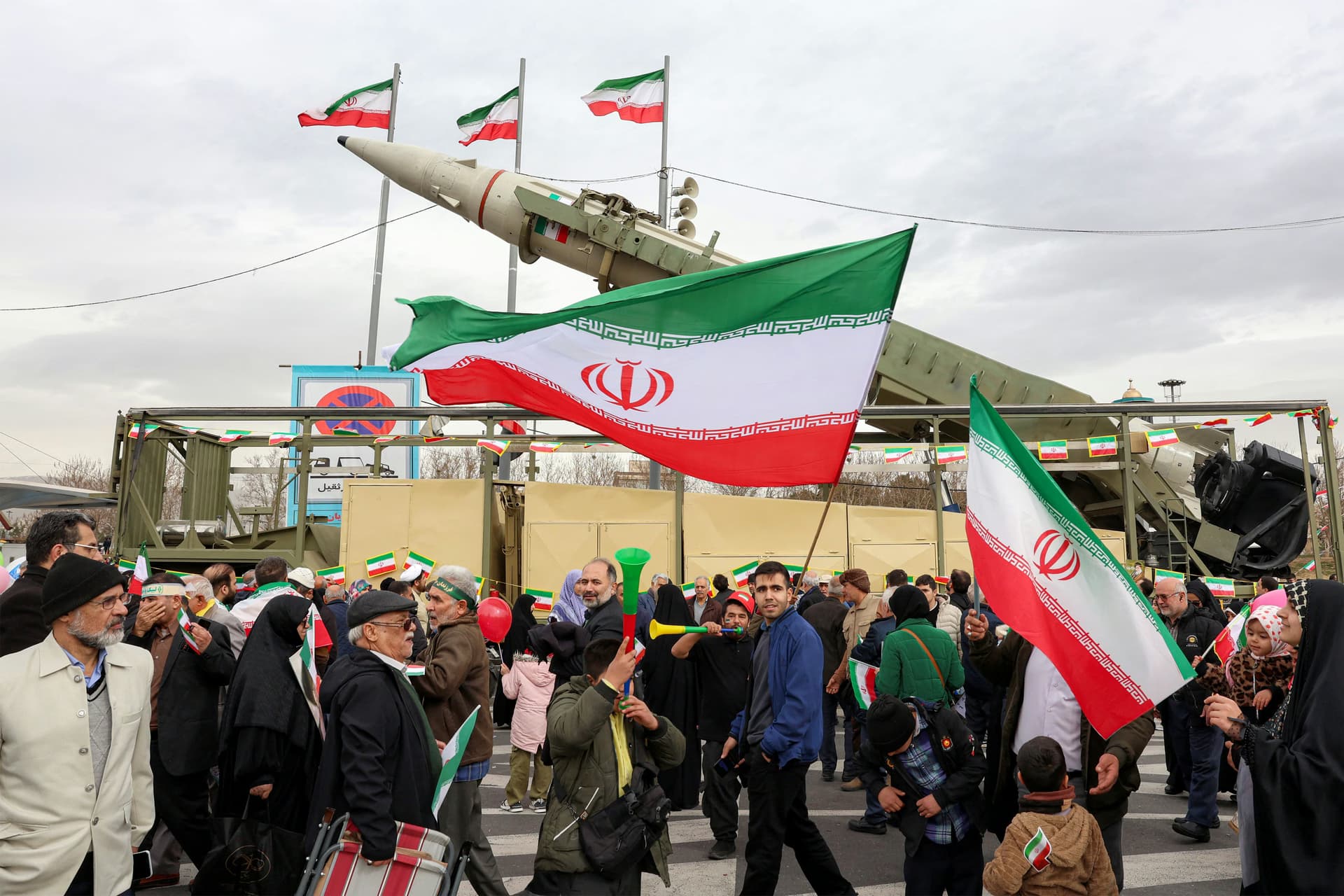
Few states in the modern Middle East have been tested as relentlessly as Iran. Sanctions, covert action, diplomatic isolation, cyber sabotage, and repeated military threats were all supposed to produce one outcome: capitulation. Instead, Iran’s defiance and strategic resilience have become central to understanding why the US-Israeli pressure campaign has not delivered the political transformation its architects expected. 🔥
What makes this story so consequential is not simply that Tehran has survived. It is that Iran has adapted, recalibrated, and, in several arenas, imposed costs on stronger adversaries. For policymakers, investors, and regional observers, that raises a critical question: why has maximum pressure failed to break the Islamic Republic? 🌍
Iran’s Defiance and Strategic Resilience Explained 🛡️
At its core, Iran’s defiance and strategic resilience rest on a simple principle: survival through endurance rather than dominance. Tehran has never tried to mirror the United States or Israel in conventional military power.
Instead, it has built a security doctrine around patience, dispersion, deterrence, and asymmetric leverage. That model allows Iran to absorb punishment while preserving enough capacity to retaliate, complicate, and outlast.
In practical terms, this approach includes:
- Decentralized command structures that reduce vulnerability to decapitation strikes
- Missile and drone capabilities that can impose real costs without air superiority
- Regional partnerships and allied networks that stretch the battlefield beyond Iran’s borders
- Economic adaptation under sanctions through informal trade, local production, and eastern partnerships
- Psychological endurance rooted in nationalism, historical memory, and resistance culture
This is why threats designed to trigger panic often produce the opposite effect: consolidation. 💫
Why the US-Israeli Pressure Strategy Misread Iran
For years, Washington and Tel Aviv operated on the assumption that enough force, enough fear, and enough deprivation would eventually compel Iranians to surrender political autonomy. That assumption has repeatedly collided with reality.
The logic behind coercion was straightforward: isolate Iran, intensify economic pain, threaten overwhelming destruction, and wait for the state to fracture from within. Yet the pressure campaign misunderstood a key factor in geopolitical analysis: societies under external siege often rally around sovereignty, even when they are deeply critical of their own governments.
That is one reason rhetorical escalation from US leaders, including extreme threats framed in civilizational terms, failed to produce collapse. Such language was meant to project unpredictability and terror—an updated version of the old “madman theory” of diplomacy. But instead of forcing capitulation, it reinforced the Iranian view that the conflict was existential.
The result was a strategic blunder. A campaign designed to break morale helped harden it. ⚡
The Asymmetric Playbook Behind Iran’s Strategic Resilience
Iran’s military doctrine is often misunderstood because it is measured against the wrong benchmark. Tehran is not trying to win a classic state-on-state war in the Western sense. It is trying to make war against itself too costly, too prolonged, and too uncertain for its adversaries.
1. Survive first, retaliate second
Iran’s core doctrine can be summarized in three words: survive, retaliate, prolong. That formula matters because it shifts the focus from battlefield spectacle to strategic endurance.
Even when absorbing blows, Tehran seeks to preserve enough capability to answer back. The point is not necessarily immediate escalation, but sustained pressure over time.
2. Decentralization as defense
Iran’s so-called mosaic defense concept disperses authority and operational capacity. If one node is hit, others continue functioning.
This matters in any confrontation involving targeted killings, cyber disruption, or command strikes. Leaders can be removed; the system, however, is designed to keep operating.
3. Drones, missiles, and low-cost deterrence
Iran has invested heavily in drones and ballistic missile systems because they offer a relatively affordable way to challenge more advanced militaries. According to multiple defense assessments, Iran now possesses one of the largest missile arsenals in the region.
That arsenal changes strategic calculations. Iran does not need to dominate the skies to hold bases, shipping lanes, and infrastructure at risk. 🚀
The Strait of Hormuz: Iran’s Ultimate Leverage 🌊
No discussion of Iran’s defiance and strategic resilience is complete without the Strait of Hormuz. Roughly one-fifth of the world’s seaborne oil trade passes through this narrow corridor, making it one of the most important chokepoints in the global economy.
Iran’s advantage is not that it can close the strait indefinitely without consequences. In fact, a prolonged closure would also hurt Iran’s own economy. The real power lies in maintaining a credible ability to disrupt traffic.
That credible threat functions as asymmetric leverage in three ways:
- It raises the global cost of escalation
- It forces energy-importing states to pay attention to Tehran’s calculations
- It turns geography into diplomatic influence
This is why even governments hostile to Iran must factor it into regional security planning. Tehran’s position along Hormuz gives it a form of strategic insurance that cannot be sanctioned away.
Why Regime Change Failed as a Political Objective
One of the clearest signs that the pressure campaign fell short is that its most ambitious goal—regime change—never materialized. If anything, repeated external threats appear to have strengthened the state’s ability to frame itself as the guardian of national independence.
That does not mean Iran is politically uniform or free from internal dissent. It is not. Iran has experienced major protests, economic frustration, and generational tensions.
But geopolitical pressure often reshapes domestic politics. When outside powers are perceived not as reformers but as would-be occupiers, even disillusioned citizens may reject foreign coercion. In that sense, military and economic pressure can unintentionally fuse nation and state under the banner of survival. 🧭
Diplomacy, Isolation, and the Shift East
Another overlooked dimension of Iran’s defiance and strategic resilience is diplomacy. While the United States sought to tighten the noose through sanctions and isolation, Iran gradually deepened ties with non-Western powers.
Its long-term strategic agreements with China, expanding cooperation with Russia, and membership in regional and Eurasian forums reflect a broader global trend: the diffusion of power away from a purely US-led order.
Several developments matter here:
- China remains a major buyer of Iranian oil through indirect channels
- Russia and Iran have expanded security and economic coordination
- Regional normalization trends have reduced Iran’s diplomatic loneliness
- Gulf states increasingly prefer de-escalation to open confrontation
At the same time, Western unity has shown cracks. European states have often been more cautious than Washington when conflict threatens energy markets, migration flows, and wider regional instability.
In other words, Iran played the long game while its adversaries often operated on short political timelines. ⏳
The Human Cost Behind the Geopolitical Narrative
Any serious geopolitical analysis must resist the temptation to treat survival as a clean victory. Iran’s resilience has come at a terrible price.
Wars of attrition do not produce tidy winners. They leave trauma, displacement, damaged infrastructure, and generations marked by grief. Children, families, and ordinary civilians bear the burden long after strategic analysts move on to the next policy memo.
So while Iran may have frustrated attempts to break its political backbone, that endurance is inseparable from profound human suffering. The state may survive; hearts, homes, and futures are often shattered in the process. 💔
This is the paradox of modern conflict: strategic success can coexist with social devastation.
What Iran’s Defiance Means for the Future of the Middle East
The broader lesson is bigger than Iran alone. The era in which overwhelming military superiority automatically produced political obedience is fading.
Across the region, non-linear warfare, economic interdependence, energy chokepoints, and multipolar diplomacy are changing the rules. States like Iran have shown that weaker actors can remain consequential by mastering endurance, geography, and calibrated retaliation.
For decision-makers, several takeaways stand out:
- Pressure without a realistic political endgame often backfires
- Asymmetric strategies can neutralize conventional advantages
- Energy geography still shapes global diplomacy
- External threats can strengthen internal cohesion rather than weaken it
- The Middle East is increasingly shaped by multipolar competition, not unilateral control
Conclusion: Defiance, Survival, and Strategic Patience ✨
Iran’s story is not one of effortless triumph. It is a story of survival under crushing pressure, of adaptation under siege, and of a state that understood its adversaries’ limits better than they understood its endurance.
That is why Iran’s defiance and strategic resilience matter far beyond Tehran. They reveal the limits of coercion, the power of asymmetric strategy, and the enduring role of sovereignty in modern geopolitics.
The US-Israeli pressure campaign aimed to force submission. Instead, it helped create a more hardened, more adaptive, and in some respects more strategically relevant Iran. The costs have been immense, and the human toll cannot be sanitized. But the central geopolitical fact remains: Iran did not bend. And in the Middle East of today, that alone reshapes the board. 🔥
You May Also Like

Geopolitical Analysis
Saudi Arabia's Bold Minerals Strategy
July 1, 2026
Geopolitical Analysis
Strategic Challenges in Securing the Strait of Hormuz
June 30, 2026
Geopolitical Analysis
Sovereignty, Airpower & Alliance Integration Limits
June 30, 2026
Geopolitical Analysis
Myanmar: A Renewed Frontline in India-China Tensions
June 29, 2026