Category:
Geopolitical AnalysisThe Fall of North American Pax Mercatoria
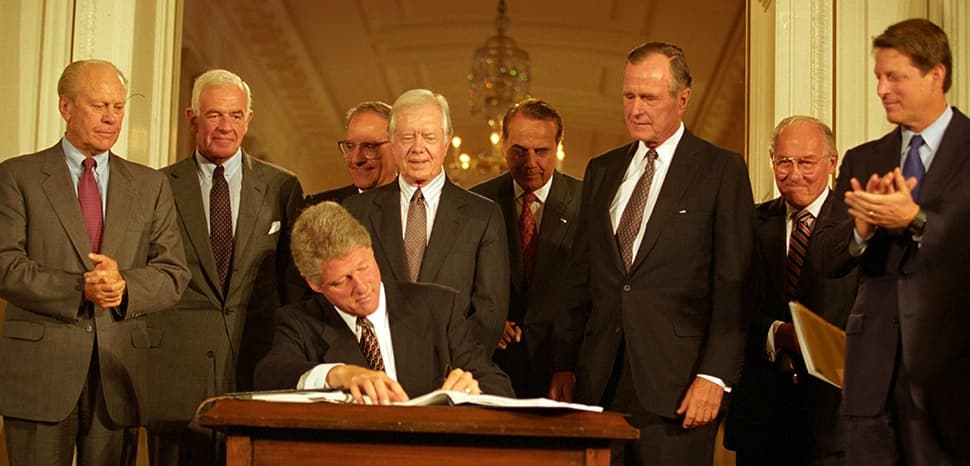
In recent years, the once robust North American trade framework, known as 'Pax Mercatoria,' has seen a notable decline. This intricate web of economic ties, initially spun by the North American Free Trade Agreement (NAFTA), was envisioned as a seamless integration of the United States, Canada, and Mexico. But what led to its downturn?
The Rise and Impact of NAFTA 🌎
NAFTA, established in 1994, was a groundbreaking agreement aimed at fostering trade and economic collaboration among its member nations. Unlike the Bretton Woods system, which was deeply intertwined with Cold War dynamics, NAFTA was predominantly mercantile, focusing on economic rather than political alliances. Its goal was to leverage each country's strengths—be it technology, agriculture, or manufacturing—to create a mutually beneficial trading environment.
Economic Boom and the Rise of Mexico 📈
The agreement spurred the creation of extensive logistic networks and cross-border supply chains. Major industries such as automotive, electronics, and textiles flourished, driven by the geographic proximity and reduced trade barriers. Mexico emerged as a critical player, attracting foreign direct investments from countries like Japan and Germany, eager to tap into the lucrative US market.

Unintended Consequences 🤔
However, alongside legitimate trade, illicit activities like drug trafficking surged, exploiting the newly opened borders. While these were initially perceived as controllable side effects, they soon became significant challenges.
Transition to USMCA and Emerging Challenges 🔄
In 2020, NAFTA was rebranded as the United States-Mexico-Canada Agreement (USMCA). The transition aimed to address modern economic realities but fell short of expectations. Amidst global trade wars and rising protectionism, the agreement managed to preserve market access but introduced complexities like stricter rules of origin and labor policies.
The US Perspective: A Shift in Strategy 🇺🇸
Under the Trump administration, US economic strategy became increasingly protectionist. The administration's 'America First' policy emphasized reshoring industrial activities, viewing international trade more as a zero-sum game rather than a collective growth opportunity. This shift challenged the core principles that NAFTA was built upon.
The Future of North American Trade 🔮
As the geopolitical landscape continues to evolve, the future of North American trade remains uncertain. While the economic interdependence between these nations is undeniable, political and strategic shifts could redefine these relationships.
Key Takeaways 📝
- Economic Integration vs. National Interests: While economic integration offers numerous benefits, national security and self-sufficiency have become paramount.
- Adapting to Change: As global dynamics shift, North American countries must adapt to maintain competitive advantages.
- Potential for Renewal: Despite current challenges, there remains potential for renewing and strengthening these alliances in a way that balances economic and security interests.
The decline of the North American 'Pax Mercatoria' serves as a compelling case study in the complexities of international trade and geopolitical strategy. As nations reassess their priorities, the balance between cooperation and competition will continue to shape the global economic landscape.
You May Also Like

Geopolitical Analysis
Saudi Arabia's Bold Minerals Strategy
July 1, 2026

Geopolitical Analysis
Strategic Challenges in Securing the Strait of Hormuz
June 30, 2026

Geopolitical Analysis
Sovereignty, Airpower & Alliance Integration Limits
June 30, 2026

Geopolitical Analysis
Myanmar: A Renewed Frontline in India-China Tensions
June 29, 2026