Category:
Geopolitical AnalysisTrump's Venezuela Gambit: Limits of Shock Politics
The Shock Politics Approach 🚨
In a dramatic geopolitical move, the Trump administration orchestrated the removal of Venezuelan leader Nicolás Maduro. This maneuver, while bold, has revealed the limits of shock politics in establishing long-term stability and economic engagement.
The Initial Promise and Reality Check 💼
Following Maduro's removal, then-President Trump assured oil executives of "total safety, total security" in investing in Venezuela. However, the meeting with ExxonMobil CEO Darren Woods unveiled a stark reality: without a clear legal and commercial framework, the nation remains "uninvestable." Woods highlighted the absence of mechanisms to secure investments and returns, showcasing the gap between political promises and corporate decisions.

Institutional Inertia and Governance Challenges ⚖️
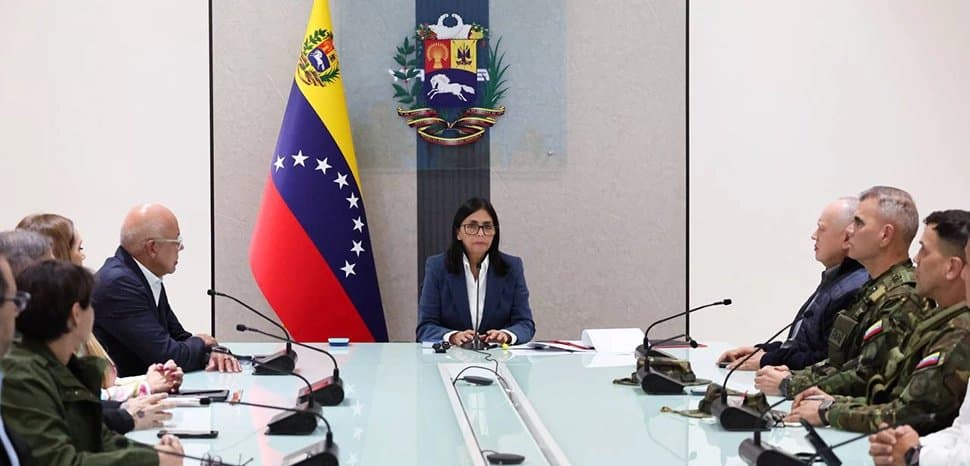
Despite Maduro's oust, the institutional architecture of his regime persists. Vice President Delcy Rodríguez, a key Maduro ally, continues to wield significant power, maintaining the status quo. The unchanged judiciary and bureaucratic structures further complicate the transition to a stable governance model. This governance ambiguity poses a significant barrier to investment as investors seek clarity on who holds decision-making power.
Legal Complexities and Investor Concerns 📜
Trump's executive order nullifying existing arbitration judgments, including ConocoPhillips' $2 billion award, has added a layer of legal complexity. Such actions undermine the predictability that insurers and investors rely upon, raising questions about future legal protections. Without a reliable framework, the risk associated with Venezuelan investments remains high.
Economic Realities of Venezuelan Oil 💧
Venezuela's vast oil reserves are often cited as a strategic asset. However, the distinction between potential reserves and economically extractable oil cannot be overstated. The country's oil, predominantly heavy and extra-heavy, demands specialized refining capabilities. The deterioration of infrastructure and a significant drop in production—from over three million barrels daily in the 1990s to less than one million—highlight the challenges ahead.
The Path Forward for Economic Stability 🔍
For Venezuela to recover its oil production capacity, significant investments are necessary. These investments hinge on restructuring debt and rebuilding state-owned PDVSA. ConocoPhillips CEO Ryan Lance emphasized the need for comprehensive institutional reconstruction, extending beyond political changes to include fundamental economic reforms. This call for action highlights the essential role of international banking and investment communities in Venezuela's recovery.
Conclusion: Navigating the Uncertain Waters 🌊
Trump's Venezuela gambit has exposed the limits of shock politics in achieving sustainable geopolitical outcomes. While the removal of Maduro was a tactical success, the lack of a coherent transition strategy and legal framework leaves Venezuela in a precarious position. For investors and policymakers, the focus must shift towards establishing reliable governance and economic structures to truly capitalize on Venezuela's potential. The coming months will be crucial in determining whether these challenges can be addressed, paving the way for a stable and prosperous Venezuela.
You May Also Like

Geopolitical Analysis
Saudi Arabia's Bold Minerals Strategy
July 1, 2026
Geopolitical Analysis
Strategic Challenges in Securing the Strait of Hormuz
June 30, 2026

Geopolitical Analysis
Sovereignty, Airpower & Alliance Integration Limits
June 30, 2026
Geopolitical Analysis
Myanmar: A Renewed Frontline in India-China Tensions
June 29, 2026