Category:
International RelationsUS-Taiwan Relations: From Allies to Strategic Partners
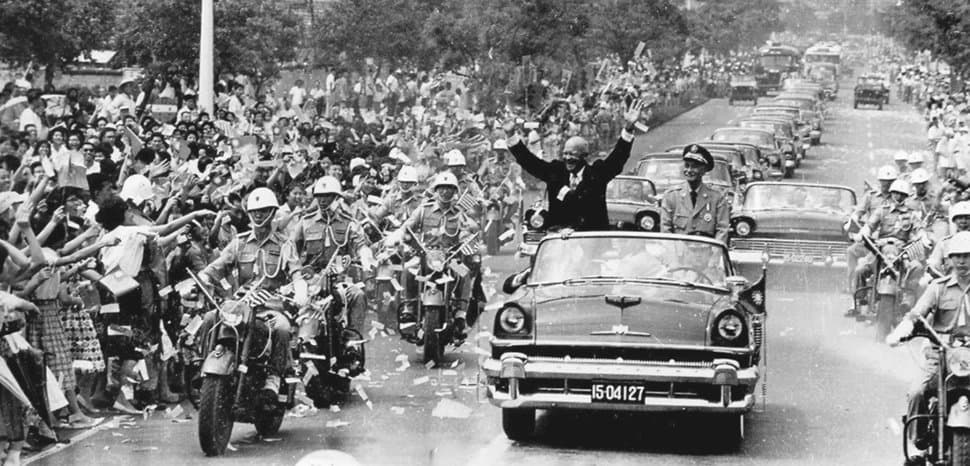
A Historical Turning Point: The 1950s
The evolution of US-Taiwan relations is a tale of strategic alliances, geopolitical shifts, and evolving national interests. It all began in June 1950, when the US Seventh Fleet sailed into the Taiwan Strait. This bold move came during a critical moment as the Chinese Communist Party consolidated control over mainland China, while the Korean War raged on the peninsula. This intervention ensured the survival of the Republic of China (ROC) in Taiwan, but it also set the stage for a complex relationship characterized by dependency and strategic constraints.

The Mutual Defense Treaty: A Double-Edged Sword
In 1954, the US and Taiwan signed the Mutual Defense Treaty, formalizing military support against external threats. This agreement solidified Taiwan's security but came at the cost of limited autonomy in its foreign policy and military decision-making. The Taiwan Strait Crises of the 1950s highlighted the importance of American military aid, which was essential for Taiwan's defense but also reinforced dependency on the US.
Strategic Shifts in the Cold War Era
The 1960s brought new challenges and opportunities as the Sino-Soviet split altered the geopolitical landscape. For the US, the priority shifted from using Taiwan as a bulwark against communism to leveraging relationships in Asia against a fracturing communist bloc. As US-China relations began to thaw, Taiwan's strategic role was reevaluated, leading to diminished influence over its own fate.
The Nixon Era and the Shanghai Communiqué
In the early 1970s, President Nixon's historic visit to China resulted in the 1972 Shanghai Communiqué, which acknowledged Beijing's "one China" policy. This marked a significant shift in US foreign policy, where Taiwan's political ambitions were sidelined in favor of strategic engagement with China. The formal recognition of the People's Republic of China (PRC) in 1979 further altered the dynamics, although the US continued to provide unofficial support to Taiwan through the Taiwan Relations Act.
Modern Dynamics: Technology and Economic Ties
Today, the US-Taiwan relationship is characterized by robust economic and technological partnerships. Taiwan is a critical player in the global semiconductor industry, making it an indispensable partner for the US in maintaining technological supremacy. Despite the lack of formal diplomatic ties, the two nations maintain strong unofficial relations, driven by shared democratic values and economic interdependence.
Looking Forward: Challenges and Opportunities
As Taiwan enters the late 2020s, it faces a world more dangerous yet more interconnected than ever. The rise of China as a global superpower presents both challenges and opportunities for Taiwan and the US. Maintaining peace and stability in the Taiwan Strait remains a priority, with both nations navigating a complex geopolitical landscape that requires careful diplomacy and strategic foresight.
Conclusion: A Future of Strategic Partnership
The evolution of US-Taiwan relations from military allies to strategic partners reflects broader trends in international relations, where economic, technological, and diplomatic ties become increasingly important. As both nations face a rapidly changing global landscape, their partnership will continue to evolve, driven by mutual interests and shared challenges.
The story of US-Taiwan relations is one of resilience, adaptation, and strategic foresight—a testament to the enduring power of alliances in shaping the world order.
You May Also Like
International Relations
Japan-India Summit: New Alliances Emerge
July 6, 2026

International Relations
Canada-Ukraine Drone Deal: A Strategic Partnership
July 2, 2026
International Relations
Taiwan's Diplomatic Struggle for Global Recognition
June 26, 2026
International Relations
US-Brazil Relations Risked by Terrorist Designations
June 4, 2026